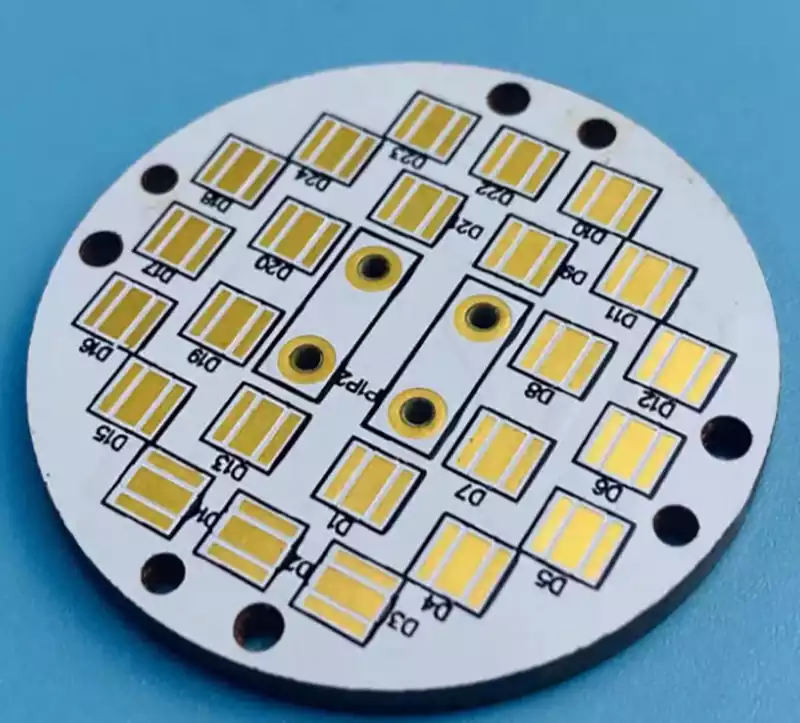
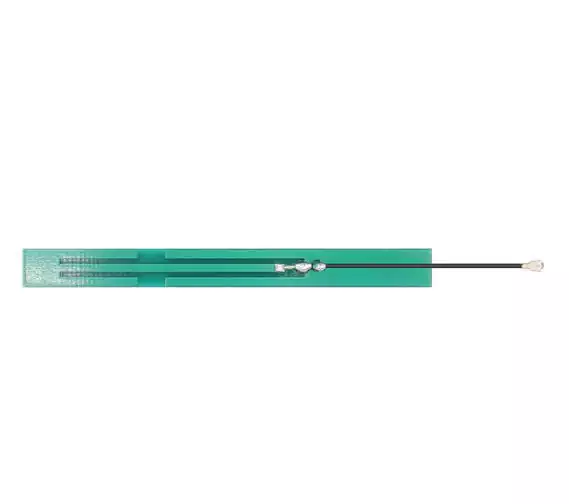
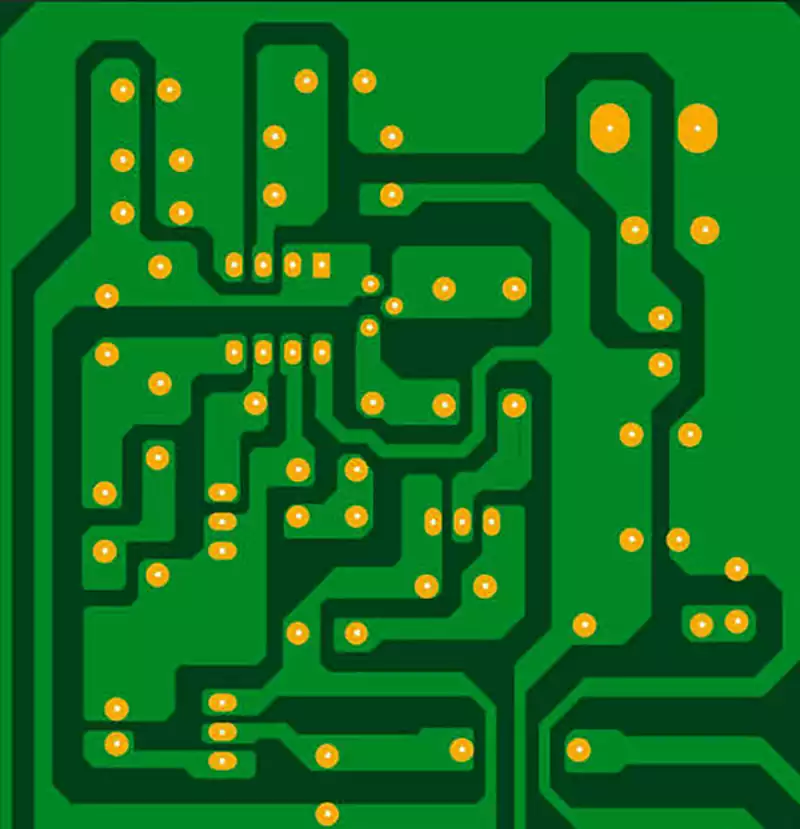
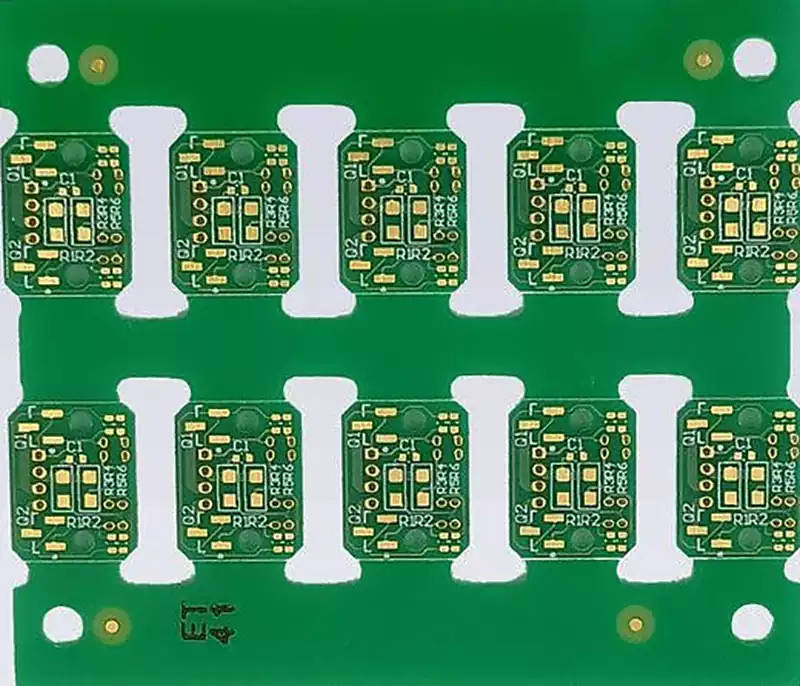
Rogers materials usually refer to a series of high-performance copper-clad laminates (CCLs) produced by Rogers Corporation, mainly including Rogers RO4000 series, RO3000 series, RT/duroid series, etc. This type of material is not a traditional fiberglass epoxy system, but is designed specifically for high-frequency applications with hydrocarbon resins, ceramic filled PTFE, or modified resin systems as the core.
Compared with FR-4, the biggest feature of Rogers material is its high stability in dielectric constant (Dk) and dielectric loss factor (Df), and it is minimally affected by frequency, temperature, and environmental changes.
Key electrical performance advantages of Rogers materials
1.Stable and controllable dielectric constant (Dk)
The dielectric constant (Dk) is the core parameter that determines the propagation speed and characteristic impedance of electromagnetic waves in a medium. In high-speed digital and RF circuits, any fluctuation in Dk can directly cause impedance offset, timing errors, and signal integrity issues.
The Dk of Rogers materials is usually stably distributed in the range of 2.2-3.5, and extremely small batch tolerances are achieved through strict formulation control and manufacturing processes. Unlike ordinary FR-4 materials, which exhibit significant Dk drift under frequency and environmental changes, Rogers materials exhibit highly consistent dielectric properties over a wide frequency range.
This stable and predictable Dk characteristic provides design engineers with higher certainty in impedance calculations, differential matching, and length compensation, especially suitable for high-speed SerDes, RF front-end, and millimeter wave circuit designs that require extremely high timing accuracy, phase consistency, and propagation delay.
2.Extremely low dielectric loss (Df)
The dielectric loss factor (Df) directly reflects the ability of materials to convert electrical energy into thermal energy in alternating electric fields, and is one of the important sources of high-frequency signal attenuation. In the GHz and even millimeter wave frequency bands, the difference in Df often has a decisive impact on system performance.
Rogers material uses a low loss resin system and high-purity fillers, with a significantly lower Df than traditional FR-4. It can effectively reduce insertion loss and signal distortion caused by dielectric loss under high-frequency conditions. This means that under the same routing length and structural conditions, Rogers material can:
Significantly reduce amplitude attenuation of high-frequency signals
Improve system signal-to-noise ratio (SNR)
Extend effective transmission distance
Reduce dependence on signal amplification and equalization circuits
Therefore, low Df has become an important technical basis for selecting Rogers materials in RF communication, millimeter wave radar, and high-speed backplane applications.
3.Excellent high-frequency consistency
In high-frequency applications, the consistency of material parameters is often more critical than the “absolute value” of a single indicator. Rogers materials maintain a high degree of electrical stability in different frequency ranges, avoiding Dk nonlinear changes caused by frequency increases.
This excellent high-frequency consistency effectively reduces the following risks:
High frequency impedance mismatch
Signal reflection and standing wave amplification
Phase error accumulation
The complexity of system debugging has increased
For broadband RF systems, multi band antennas, and high-order modulation communication schemes, the high-frequency consistency of Rogers materials can significantly improve system repeatability and overall reliability.
Thermal and mechanical performance characteristics
In addition to its electrical performance advantages, Rogers materials have also been systematically optimized for high reliability applications in both thermal and mechanical structures.
1.Low coefficient of thermal expansion (CTE)
In multi-layer PCBs and high reliability electronic systems, the thermal expansion behavior of materials directly affects the reliability of hole walls, solder joint life, and interlayer bonding strength. The coefficient of thermal expansion (CTE) of Rogers material in the Z-axis direction is close to that of copper, and it has good compatibility with the copper plated pore structure.
This feature can effectively reduce the mechanical stress generated during thermal cycling and decrease the probability of the following problems occurring:
Plated through-hole cracks
Inner layer connection failure
Reliability decline caused by long-term thermal fatigue
Especially suitable for applications in high-level PCBs, harsh temperature environments, and long-term continuous operation of communication and industrial electronic equipment.
2.Excellent heat resistance
Rogers materials have fully considered the requirements of modern electronic manufacturing processes in their design, and can stably adapt to the high-temperature process of lead-free reflow soldering. Its material system can maintain good dielectric structure and interlayer bonding strength under multiple thermal shock conditions.
Good heat resistance can effectively avoid:
Board layering
Deterioration of medium performance
High frequency parameter drift
Decreased welding reliability
This is particularly crucial for high-value, high reliability electronic products.
3.Excellent dimensional stability
In high-frequency and microwave circuits, small changes in line width, line spacing, and dielectric thickness can cause significant impedance deviations. Rogers materials have excellent dimensional stability and minimal deformation during processing and heat treatment.
This feature makes it very suitable for:
High frequency transmission structures such as microstrip lines and strip lines
Design of Thin Line Wide and Fine Pitch Circuits
High precision RF and antenna structure
Rogers materials are widely used in the following fields:
RF and microwave communication equipment (base stations, amplifiers, antennas)
Automotive radar (77GHz/79GHz millimeter wave radar)
Satellite Communication and Aerospace Electronics
High speed backboards and interface modules in high-speed servers and network devices
Medical imaging and high-precision testing instruments
Rogers materials demonstrate significant technological advantages in high-frequency, high-speed, and high reliability PCB applications due to their stable and controllable dielectric constant, extremely low dielectric loss, and excellent high-frequency consistency. With the continuous increase in communication frequency, the continuous acceleration of data rate, and the rapid popularization of millimeter wave and high-speed interconnect technology, traditional FR-4 materials are no longer able to fully meet the performance requirements of high-end electronic systems. In this context, Rogers materials have become an indispensable key substrate in fields such as RF communication, automotive radar, aerospace, and high-speed data centers, thanks to their specialized design for high-frequency applications.