As a core component within microelectronic packaging and interconnect technology, the evolution of co-fired ceramic technology profoundly reflects the escalating demands for performance, integration, and reliability within electronic systems. From the earliest High-Temperature Co-fired Ceramics (HTCC) to the subsequent evolution of Low-Temperature Co-fired Ceramics (LTCC), these two technologies represent not a simple iteration or substitution, but distinct technical pathways and advantages shaped by differing engineering emphases and application scenarios.
The emergence of co-fired ceramic technology was not driven by the pursuit of novel materials per se, but rather by the engineering imperatives of electronic systems for reliable interconnections, multilayer integration, and environmental adaptability. Against this backdrop, HTCC represented the earliest mature and widely adopted technical route, with a singular objective: to deliver structural stability and long-term reliability far surpassing organic PCBs under high-temperature, high-power, and complex environmental conditions. Early electronic systems exhibited less differentiated performance requirements, with engineering priorities centred more on ‘usability’ and ‘reliability’ rather than volume, frequency, or integration density. This era laid the foundational groundwork for HTCC’s established technological position.
As communication technologies advanced towards higher frequencies and electronic modules continued to miniaturise, the limitations of traditional HTCC gradually became apparent. Conductor losses stemming from high-melting-point metals, constrained routing density, and relatively conservative structural designs rendered it increasingly inadequate for meeting new system demands in high-frequency and high-integration applications. Engineering practice began to demonstrate that not all applications necessitated withstanding extreme temperature conditions. In contrast, superior electrical performance, more compact structures, and higher functional integration emerged as the new core requirements. Driven by this shift in demand, LTCC expanded the design possibilities for ceramic circuit boards by lowering sintering temperatures and introducing novel materials and process approaches.
Therefore, from a technology-driven perspective, HTCC places greater emphasis on reliability and environmental tolerance, whereas LTCC prioritises electrical performance and system integration. This fundamental difference in approach dictates a series of trade-offs in material selection, process routes, and application positioning, permeating all technical details.
In engineering practice, material systems are often simplistically understood as ‘differences in formulation’. However, for LTCC and HTCC, the true distinction lies in the fundamentally different sintering mechanisms. HTCC employs high-temperature solid-state sintering, wherein ceramic particles achieve densification through grain boundary diffusion and grain growth at extremely high temperatures. Pores are thoroughly eliminated, ultimately forming a highly stable crystalline structure. This structure exhibits extremely low porosity, excellent crystalline integrity, and minimal performance variation under high-temperature conditions. However, it also necessitates withstanding extreme sintering conditions, leaving virtually no scope for material system adjustments and imposing stringent demands on equipment and process control.
LTCC, conversely, modifies this sintering process by introducing a glass phase into the ceramic system. During heating, this glass phase softens and undergoes viscous flow, filling the voids between ceramic particles. This enables densification at comparatively lower temperatures. This liquid-phase-assisted sintering mechanism means LTCC is not merely a ‘low-temperature variant’ of HTCC, but rather a fundamentally distinct technological approach in its formative logic. The direct outcome is a significant reduction in sintering temperatures and easier control of internal stresses. However, this also introduces the objective limitation that long-term high-temperature stability is constrained by the glass phase. This very constraint is the primary reason LTCC struggles to replace HTCC in sustained high-temperature operating conditions.
The differences in conductor systems similarly reflect the distinct definitions of system capability boundaries between the two technologies. The widespread use of silver and its alloys as conductors in LTCC not only implies lower DC resistance but also results in reduced high-frequency surface losses, conferring superior signal transmission characteristics in the microwave and millimetre-wave bands. Concurrently, the silver-based system facilitates finer line widths and tighter pitch routing, enabling high-density circuit design. This endows LTCC with electrical performance potential approaching semiconductor processes in high-frequency circuits.
The value of high-melting-point metals like tungsten and molybdenum used in HTCC lies not in their conductivity but in their exceptional compatibility with high-temperature sintering processes. These metals maintain structural stability above 1500°C, forming reliable interfaces with the ceramic substrate. This ensures that vias and internal interconnects remain functional under extreme conditions and maintain interface integrity during prolonged thermal cycling. This characteristic makes HTCC more suitable for carrying high currents and enduring long-term thermal stress, rather than pursuing extreme signal performance. Thus, the selection of conductor systems fundamentally represents a trade-off between two engineering objectives: signal quality versus environmental endurance.
Differences in process routes further amplify the divergence in design freedom between the two technologies. LTCC’s low-temperature characteristics permit extensive structural completion prior to sintering, enabling engineers to realise complex designs during the green sheet stage. This includes embedded resistors and capacitors, multilayer RF structures, and functional units such as sealed cavities or microfluidic channels. This capability elevates LTCC beyond mere electrical interconnection, evolving it into a three-dimensional functional carrier. However, increased design complexity significantly heightens manufacturing consistency risks, demanding stricter process control and quality management.
The process logic of HTCC adopts a more conservative approach. High-temperature sintering necessitates thorough consideration of shrinkage, deformation, and structural stability during the design phase, resulting in relatively constrained design space. Engineers primarily focus on layout within established reliability boundaries rather than pursuing high integration. While this constraint reduces design flexibility, it yields greater predictability and batch stability, making it particularly suitable for industrial-grade and automotive-grade applications demanding stringent consistency.
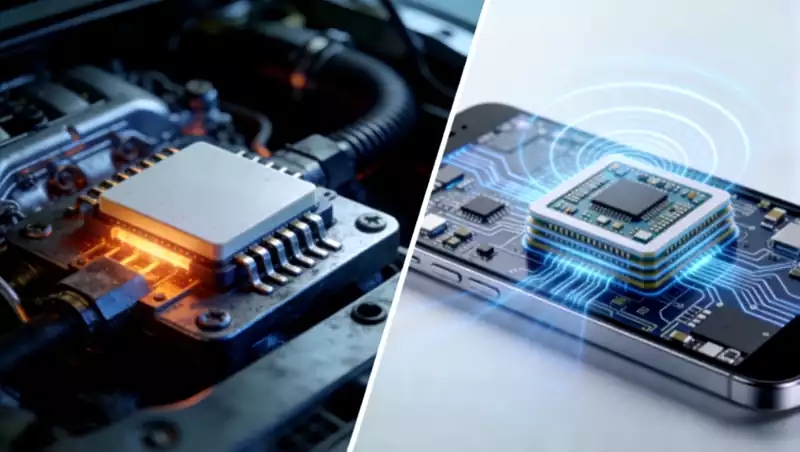
From a systemic perspective, the distinction between LTCC and HTCC lies not in a single parameter but in differing emphases across a comprehensive suite of performance characteristics. LTCC prioritises high-frequency loss, signal delay consistency, and functional density, rendering it widely adopted in communications, radar, and precision sensing systems. HTCC, conversely, emphasises long-term high-temperature stability, thermal shock resistance, mechanical strength, and packaging reliability, serving automotive electronics, industrial control, and aerospace applications over extended periods. The two technologies do not compete on the same plane but each represents an optimal solution for distinct system objectives.
In practical engineering projects, the choice between LTCC and HTCC often directly influences a product’s technical trajectory and overall cost structure. Employing LTCC in prolonged high-temperature, high-power environments may introduce potential reliability risks; conversely, using HTCC in high-frequency, miniaturised modules could lead to performance redundancy and increased costs. Mature engineering judgement must transcend mere parameter comparisons, instead conducting comprehensive evaluations across multiple dimensions: operational environments, signal characteristics, lifespan requirements, and total lifecycle costs. Only through a thorough understanding of the intrinsic differences between these technologies can genuinely rational selection decisions be made.
The technological evolution and application selection between HTCC and LTCC do not represent a simple superiority-inferiority distinction, but rather optimisation and trade-offs tailored to diverse electronic system requirements. HTCC continues to play an irreplaceable role in extreme environments through its exceptional high-temperature endurance, reliability, and structural stability. Conversely, LTCC demonstrates formidable potential in modern electronic systems pursuing miniaturisation and high-frequency operation, leveraging its superior electrical performance, high integration density, and design flexibility.