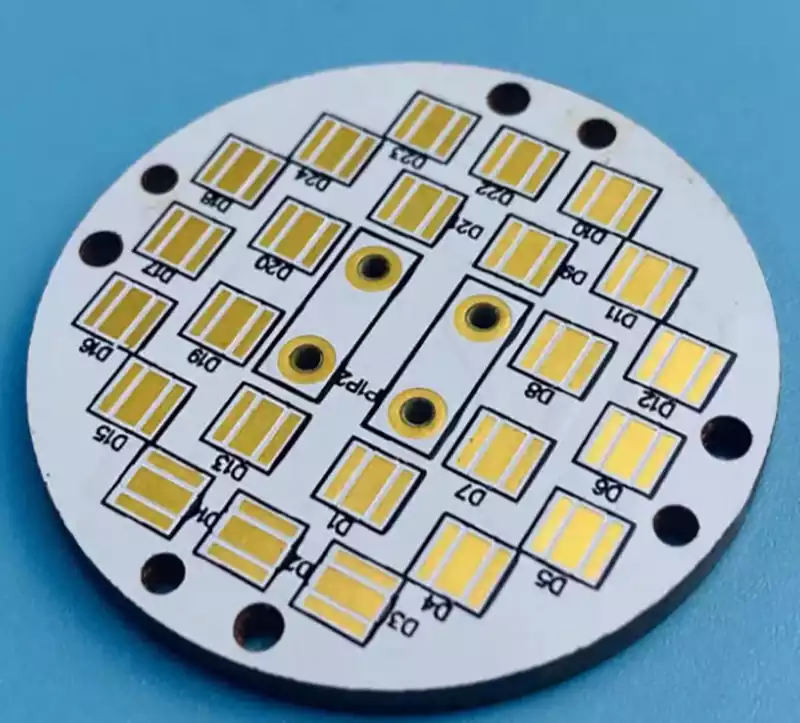
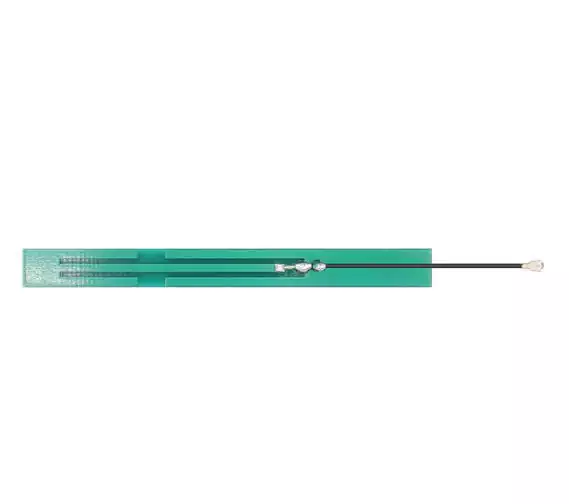
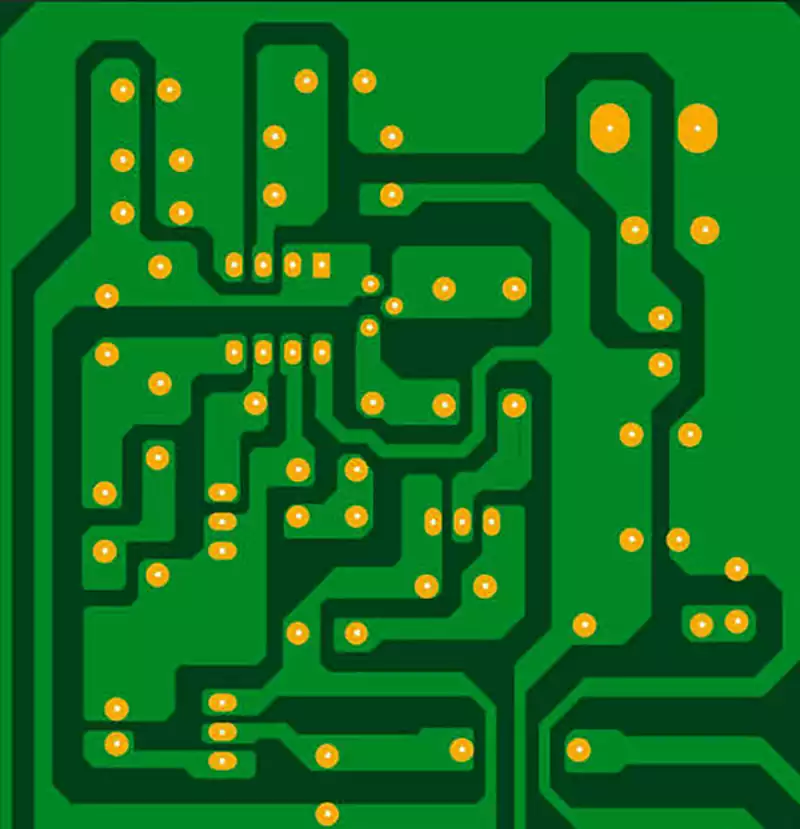
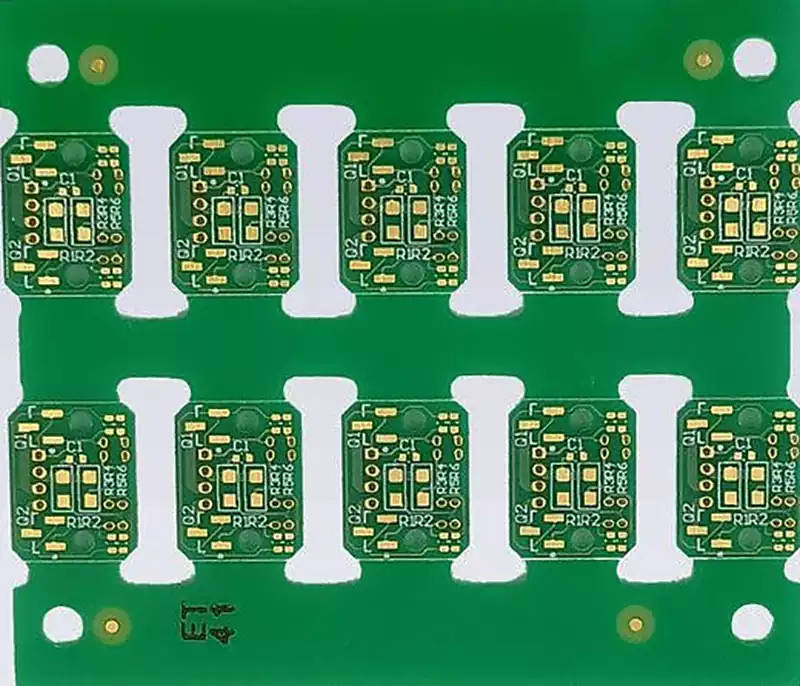
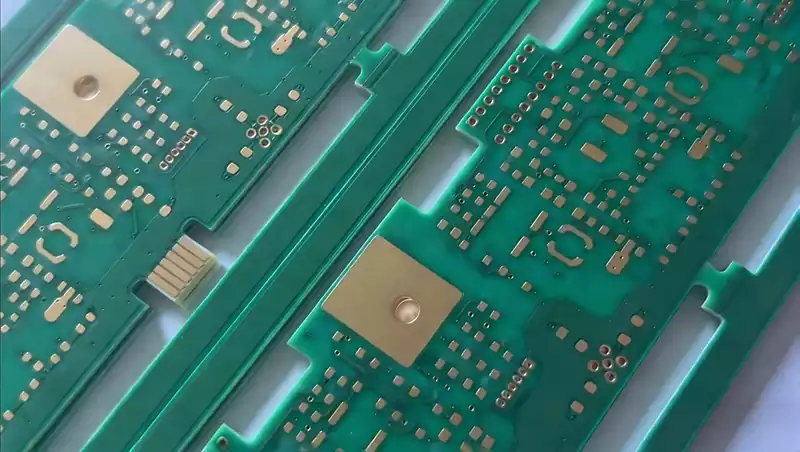
High Tg FR4 is a flame-retardant glass fibre reinforced epoxy resin substrate with a glass transition temperature (Tg) ≥170°C. It serves as a commonly used high-temperature resistant base material for PCBs. Through optimised resin formulation, its thermal resistance and stability are enhanced, making it suitable for lead-free soldering and high-temperature operating conditions.
Tg (Glass Transition Temperature) is a critical performance indicator for FR4 substrates, denoting the critical temperature at which epoxy resin transitions from a rigid ‘glass state’ to a flexible ‘highly elastic state’. When the operating temperature of FR4 exceeds Tg, the substrate’s mechanical properties and insulation performance deteriorate sharply; below Tg, it maintains stable performance characteristics.
Conventional FR4 typically exhibits a Tg range of 130–140°C, whereas high Tg FR4 generally achieves ≥170°C, with certain premium variants exceeding 200°C. The fundamental distinction stems from the epoxy resin formulation: conventional FR4 employs standard bisphenol A epoxy resin, featuring relatively simple molecular chain structures with limited thermal stability; High Tg FR4 predominantly employs modified epoxy resins (such as phenolic epoxy or biphenyl epoxy), enhancing the substrate’s thermal decomposition temperature and thermal stability by optimising molecular chain crosslink density. Furthermore, high Tg FR4 imposes stricter requirements on glass fabric selection and lamination processes. It typically employs high-purity glass fabrics and high-temperature, high-pressure lamination techniques to ensure a dense, void-free substrate structure, thereby further enhancing thermal stability and mechanical strength.
In terms of performance metrics, high Tg FR4 demonstrates significant improvements over conventional FR4 in thermal, mechanical, and insulating properties: its heat deflection temperature exceeds conventional FR4 by 30–50°C, with a thermal weight loss rate below 2% at 180°C (compared to over 5% for conventional FR4); Its flexural strength retains over 80% of room-temperature values at elevated temperatures (150°C), whereas conventional FR4 maintains only 50%; under humid heat conditions (150°C, 85% RH), high Tg FR4 exhibits insulation resistance 10-100 times greater than conventional FR4, demonstrating superior insulation stability. These performance advantages are precisely what high-power applications demand.
Why must high-power applications select high Tg FR4?
1.Resisting sustained high temperatures to prevent substrate thermal deformation and delamination
Core components in high-power electronic equipment (such as IGBTs, power MOSFETs, and rectifier bridges) generate substantial heat during operation. Even with cooling systems, the long-term operating temperature of PCB substrates may reach 150–180°C. Conventional FR4 exhibits a glass transition temperature (Tg) of merely 130–140°C. At this threshold, the material enters a highly elastic state, manifesting pronounced thermal deformation (marked increase in coefficient of thermal expansion, CTE). This causes PCB traces to stretch and solder joints to crack. More critically, elevated temperatures compromise the interfacial bonding strength between epoxy resin and glass fibre cloth, leading to delamination, blistering, and even copper foil detachment—directly triggering equipment short-circuit failures.
High Tg FR4 exhibits a Tg value ≥170°C, with an upper operating temperature limit far exceeding conventional FR4. It maintains a glassy state under sustained temperatures of 150-180°C, controlling thermal deformation to within 0.2%—significantly lower than the 1.5% typical for standard FR4. Concurrently, the higher crosslink density of epoxy resin molecular chains in high Tg FR4 ensures tighter interfacial bonding with glass fibre cloth, minimising delamination and bubbling under elevated temperatures. Experimental data indicates that after 1000 hours of continuous testing at 180°C, high Tg FR4 substrates showed no significant delamination, whereas conventional FR4 exhibited pronounced bubbling and separation after just 200 hours.
2.Withstanding Instantaneous Thermal Shock to Ensure Structural Stability
In high-power applications, equipment start-stop cycles and sudden load changes (e.g., acceleration in new energy vehicles, emergency stops in industrial equipment) subject PCB substrates to instantaneous thermal shock. Temperatures surge from ambient levels to over 180°C within seconds to tens of seconds before rapidly declining. Such drastic temperature fluctuations impose immense thermal stresses on the PCB substrate, testing its mechanical strength and fatigue resistance.
Conventional FR4 exhibits considerable brittleness. Under instantaneous thermal shock, thermal stresses concentrate at internal voids or interface defects within the substrate, readily inducing microcracks. Repeated thermal shocks over time cause these microcracks to propagate, ultimately leading to PCB fracture. High-Tg FR4 employs modified epoxy resin with enhanced toughness and fatigue resistance. Concurrently, optimised lamination processes reduce internal porosity (≤1%), mitigating the risk of thermal stress concentration. In thermal shock cycling tests spanning -40°C to 180°C, high Tg FR4 exhibited no cracks after 500 cycles with mechanical strength retention ≥90%. In contrast, conventional FR4 developed visible cracks after just 100 cycles, with mechanical strength declining by over 40%.
3.Maintaining high-temperature insulation performance to mitigate electrical safety risks
In high-power applications, PCB substrates must withstand not only elevated temperatures but also the rigours of high voltages and substantial currents. The stability of insulation properties directly impacts the electrical safety of equipment. High temperatures accelerate the ageing and degradation of epoxy resins, generating low-molecular-weight substances. Concurrently, they reduce the substrate’s insulation resistance and increase leakage currents. In severe cases, this can lead to insulation breakdown, triggering safety incidents.
The modified epoxy resin employed in high Tg FR4 exhibits superior ageing resistance, with a degradation rate under high-temperature conditions significantly lower than conventional FR4. In a humid-heat environment of 150°C and 85% RH, high Tg FR4 achieves an insulation resistance exceeding 10¹² Ω·cm and leakage current ≤ 10 μA. After 1000 hours of ageing, the insulation resistance decline rate remains ≤ 10%. Conversely, conventional FR4 exhibits an insulation resistance of merely 10⁹ Ω·cm under identical conditions, with leakage current ≥50 μA. After 200 hours, its insulation resistance degradation exceeds 50%. Furthermore, high-Tg FR4 demonstrates superior arc resistance, achieving an arc endurance rating exceeding 180 seconds. This enables effective defence against transient overvoltage surges in high-power scenarios, thereby mitigating the risk of insulation breakdown.
Typical Application Areas for High Tg FR4
1.New Energy Vehicle Sector (Inverters, OBCs, PDUs)
The inverter serves as the core power module in new energy vehicles, converting the battery’s direct current into alternating current to drive the motor. Operating power can reach tens of kilowatts or even hundreds of kilowatts, with the internal PCB substrate enduring long-term operating temperatures of 150-180°C while facing instantaneous thermal shocks during start-stop cycles. OBCs (on-board chargers) and PDUs (power distribution units) encounter similar high-temperature scenarios. High Tg FR4 maintains stable performance under these conditions, preventing PCB failures caused by elevated temperatures and ensuring the operational safety of new energy vehicles. Currently, leading new energy vehicle manufacturers (such as Tesla, BYD, and CATL) utilise high-Tg FR4 substrates for their power module PCBs.
2.Industrial Control and Power Electronics Applications (Inverters, Servo Drives, Rectifiers)
Industrial inverters, servo drives, and similar equipment control high-power motors. During operation, power devices generate substantial heat, with PCB substrates typically operating at temperatures between 140-160°C. Rectifiers must perform AC-DC conversion under high-voltage, high-current, and high-temperature conditions, demanding exceptional insulation properties and thermal stability from the PCB. High-Tg FR4 effectively withstands the high temperatures and thermal shocks in these scenarios, ensuring continuous and stable operation of industrial equipment while minimising production interruptions caused by PCB failures.
3.High-Frequency Communications and Energy Storage Applications (5G Base Station Power Amplifiers, Energy Storage Inverters)
Power amplifiers (PAs) in 5G base stations operate at significantly increased power levels to achieve high bandwidth and transmission rates, with internal PCB substrate temperatures exceeding 150°C. Energy storage inverters convert direct current from storage batteries into alternating current for grid integration, facing dual challenges of high power, high voltage, and transient thermal shocks during operation. High Tg FR4 not only meets the elevated temperature demands of these applications but also exhibits superior dielectric properties (low dielectric loss factor Df), minimising high-frequency signal attenuation and aligning with the requirements of 5G high-frequency communications.
Key Parameters and Considerations for Selecting High Tg FR4
Key Parameters
Firstly, precise matching of the Tg value: Select the corresponding Tg value based on the PCB’s long-term operating temperature. It is recommended that the Tg value be 20-30°C higher than the long-term operating temperature (e.g., for a long-term operating temperature of 150°C, choose a product with Tg ≥ 180°C). If transient thermal shocks are present, further increase the Tg value margin (e.g., for a transient temperature of 200°C, choose a product with Tg ≥ 200°C). Secondly, thermal performance parameters: Monitor heat deflection temperature (HDT), coefficient of thermal expansion (CTE), and thermal weight loss rate to ensure substrate thermal stability at elevated temperatures. Thirdly, insulation performance parameters: Assess insulation resistance, arc resistance, and dielectric loss to meet high-voltage and high-frequency application requirements. Fourthly, mechanical performance parameters: Evaluate flexural strength and impact resistance to withstand thermal stresses from transient thermal shocks.
Points to Note
Avoid the misconception that ‘higher Tg values are always better’: excessively high Tg values significantly increase substrate costs (high-Tg FR4 with Tg ≥ 200°C costs 1.5–2 times more than standard high Tg FR4) and reduce substrate toughness. For applications with lower temperature requirements, selecting an appropriate Tg value is sufficient—there is no need to blindly pursue high Tg. Concurrently, select products from reputable manufacturers to ensure accurate Tg value declarations (some low-cost products falsely inflate Tg values). Request third-party testing reports (e.g., SGS, UL certification) from suppliers. Furthermore, high-Tg FR4 demands stricter processing parameters (e.g., lamination temperature, curing time). Coordinate with PCB manufacturers beforehand to ensure processing techniques align with substrate characteristics.
FAQ
Q1: Does a higher Tg value in high Tg FR4 equate to superior performance?
A1: Not necessarily. A higher Tg value indicates better thermal stability, but it also leads to increased substrate costs and reduced toughness. The core principle for selection is ‘application suitability’. Simply ensure the Tg value exceeds the PCB’s long-term operating temperature by 20-30°C. Blindly pursuing excessively high Tg values increases costs and may impair PCB processing performance (e.g., drilling-induced cracking).
Q2: Can conventional FR4 be adapted for high-power scenarios through thermal optimisation?
A2: This is highly challenging. Thermal optimisation can only reduce the PCB’s surface temperature; it cannot alter the substrate’s inherent thermal stability limits. In high-power scenarios, internal PCB temperatures may far exceed surface temperatures. Conventional FR4’s low Tg means that even if surface temperatures are controlled below 130°C, internal temperatures may still surpass the Tg, causing substrate deformation and delamination. High-power applications must rely on the intrinsic thermal stability of high-Tg FR4; thermal optimisation serves only as a supplementary measure.
Q3: Is there a significant cost difference between high Tg FR4 and conventional FR4?
A3: The difference is pronounced. High Tg FR4 (Tg ≥ 170°C) costs 30%-50% more than conventional FR4; premium high-Tg FR4 with Tg ≥ 200°C costs 1.5-2 times more than conventional FR4. This cost disparity primarily stems from raw material expenses—such as modified epoxy resins and high-purity glass fibre cloth—alongside the increased costs associated with more stringent lamination processes.
Q4: How can one verify whether the Tg value of high Tg FR4 meets specifications?
A4: Professional testing methods can be employed for verification, with common approaches including Differential Scanning Calorimetry (DSC) and Thermomechanical Analysis (TMA). It is advisable to request third-party test reports (e.g., SGS or UL certification reports) from suppliers, or submit samples to professional testing institutions for verification. Additionally, high-temperature ageing tests can provide supplementary validation: subject the PCB to continuous ageing at a temperature 10°C below the declared Tg value for 1000 hours. The absence of delamination or deformation indicates that the Tg value is essentially compliant.
Q5: How does the processing of high Tg FR4 differ from conventional FR4?
A5: High Tg FR4 demands stricter processing parameters. Laminating temperatures must be elevated to 180–220°C (compared to 150–160°C for standard FR4), with extended curing times (typically 30–50% longer). Sharper drill bits must be used during drilling, with reduced drilling speeds to prevent rough hole walls or cracks caused by substrate toughness variations. During soldering, reflow temperatures may be moderately increased but must remain below the Tg value to avoid substrate deformation.
Q6: For high-power applications, what supporting designs are required besides selecting high Tg FR4?
A6: Optimise thermal management, circuit layout, and packaging processes. For thermal design, incorporate heat-sink vias, large copper planes, and heat-sink pads alongside heatsinks or fans to enhance dissipation. In circuit layout, prevent excessive power component clustering to minimise local hotspots. For packaging, select high-temperature-resistant components and soldering materials to ensure the entire PCB system’s thermal compatibility.
The high-temperature challenges inherent in high-power applications render conventional FR4 unsuitable for reliable operation. High Tg FR4, with its exceptional thermal stability, mechanical strength and insulation properties, emerges as the indispensable solution for such scenarios. From new energy vehicles to industrial control systems, from 5G communications to energy storage systems, high Tg FR4 is ubiquitous, providing a robust safety foundation for high-power electronic equipment.