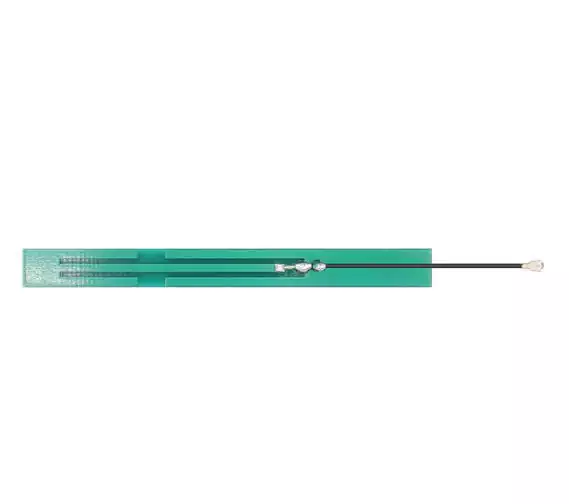
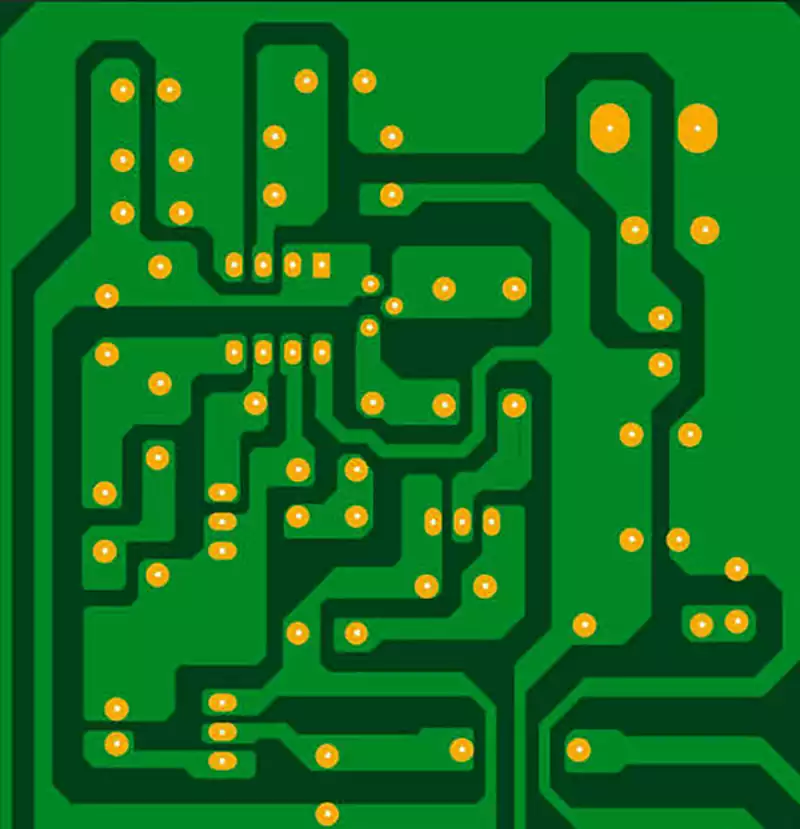
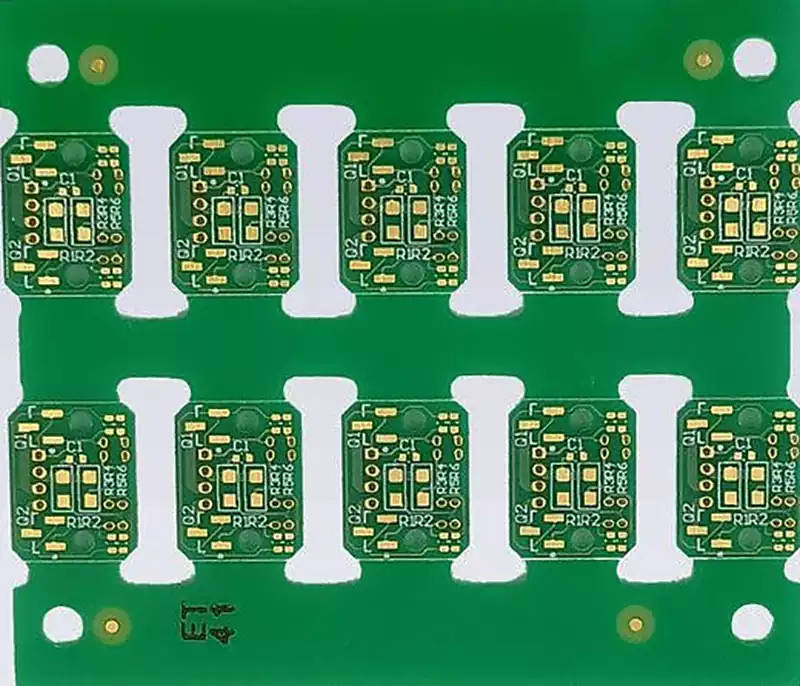
What is copper clad laminate? Copper Clad Laminate, abbreviated as CCL, serves as the core fundamental substrate for Printed Circuit Board (PCB) fabrication. It directly governs circuit boards’ insulation performance, thermal stability, signal transmission capability and overall service life, and is widely deployed across diverse electronic sectors including consumer electronics, industrial control equipment, new energy systems and servers.
Copper Clad Laminates made from distinct materials, manufactured via different processes and possessing varied performance metrics feature vastly dissimilar applicable production scenarios and end products. Mastering their classification criteria, grade disparities and core parametric characteristics precisely constitutes the cornerstone of PCB material selection, circuit design and finished product quality control.
This paper systematically sorts out mainstream CCL classification frameworks, industry-standard quality grades and pivotal technical parameters such as prepreg and dielectric constant, and thoroughly dissects the industrial application logic and technical essentials of copper clad laminates.
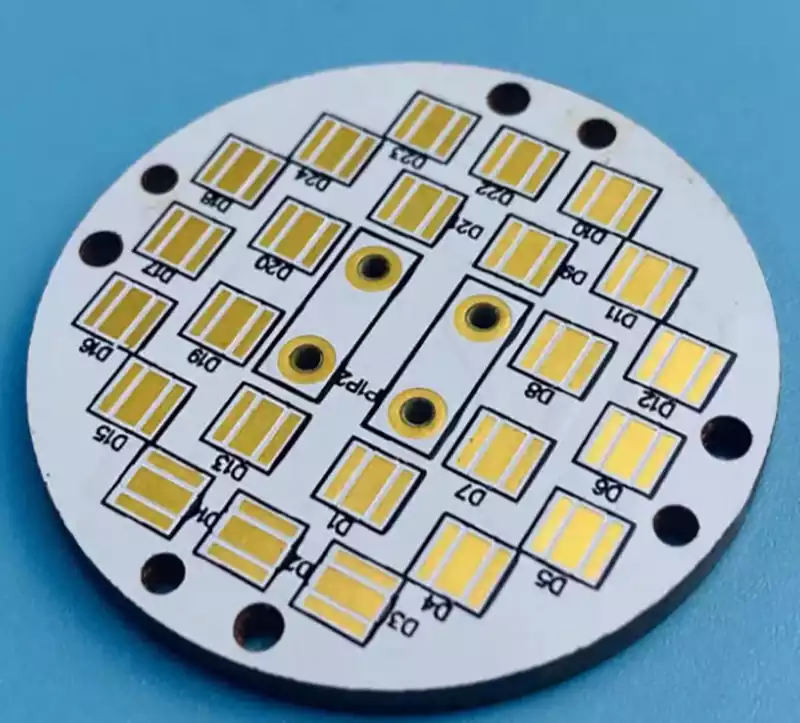
As the primary substrate for PCB manufacturing, CCLs fall into five mainstream categories classified by the composition of their internal reinforcing materials, each tailored to distinct operating conditions and product requirements. The five categories are paper-based substrates, glass fiber cloth-based substrates, CEM-series composite substrates, multilayer build-up substrates, and special functional substrates such as ceramic-core and metal-core laminates. Dramatic gaps exist among all categories in hardness, heat resistance and machinability.The resin adhesive system dictates a CCL’s insulation, heat resistance and dimensional stability, representing a decisive factor of board performance.
Epoxy resin acts as the mainstream adhesive for glass fiber cloth-based copper clad laminates. Grades FR-4 and FR-4 deliver well-balanced comprehensive performance, making them the most widely adopted copper clad laminates across the electronics industry to date.Beyond epoxy based boards, the market features an array of specialty resin laminates paired with reinforcing media including glass fiber fabric, polyamide fiber and non-woven fabric. High-end resin systems encompass BT resin (bismaleimide triazine), PI (polyimide), PPO (polyphenylene oxide), MS resin (maleimide-styrene), cyanate ester and polyolefin resins, primarily deployed in high-precision electronic devices.
Per UL flammability test standards, copper clad laminates are split into two major tiers: flame-retardant and non-flame-retardant. Non-flame-retardant laminates comply with UL94-HB classification and offer no fire suppression capacity. Flame-retardant grades cover two commonly used UL94 ratings: V-0 and V-1, which effectively inhibit flame spread.
Amid increasingly stringent environmental manufacturing regulations, halogen-free eco-friendly flame-retardant copper clad laminates have been developed as an upgrade over traditional flame-retardant boards. Eliminating brominated flame retardant additives, these laminates reconcile fire resistance with environmental compliance and have become the mainstream new-generation green substrates.
Driven by the miniaturization, high-speed signal transmission and enhanced stability of electronic hardware, performance requirements for copper clad laminates continue to escalate. Based on differentiation in core performance indicators, copper clad laminates are segmented into four product lines: general-purpose standard grade, low-dielectric high-speed transmission grade, high-temperature resistant grade and low coefficient of thermal expansion (low CTE) precision grade.
High-heat-resistant laminates withstand continuous temperatures above 150°C, while low-CTE substrates are mainly used for IC packaging substrates to prevent board deformation under high temperatures that would compromise packaging precision.
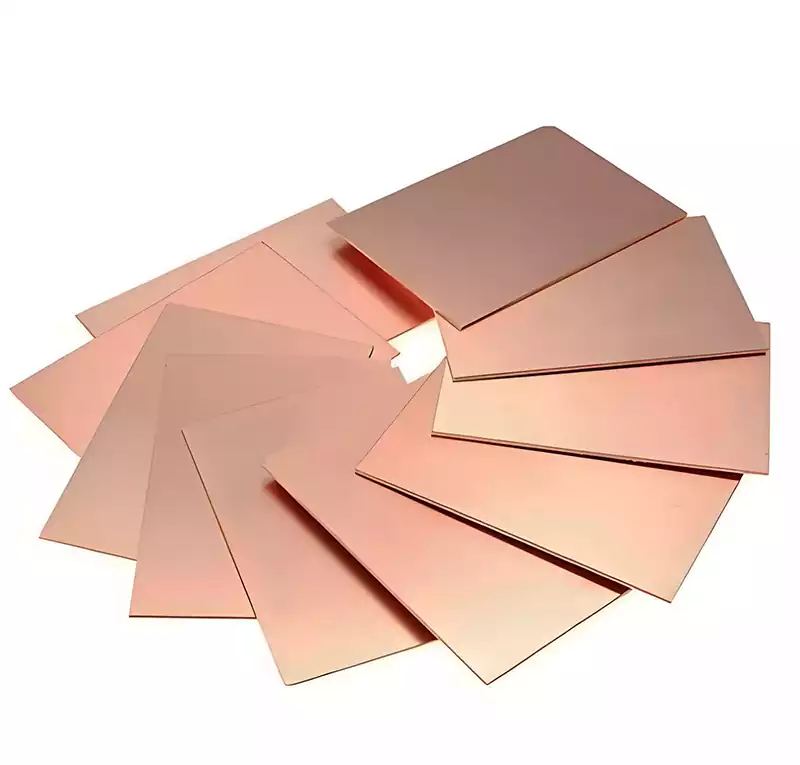
The electronics industry has established standardized quality grade rankings sorted from entry-level to high-performance, ordered as follows: 94HB, 94V-0, 22F, CEM-1, CEM-3 and FR-4. Each grade differs distinctly in material structure, processing methods and applicable scenarios.
94HB: Basic paper-based laminate with zero flame retardancy, the lowest-tier PCB substrate. Only punch molding is viable for processing. Its inferior heat and fire resistance prohibit use in power circuit boards entirely.
94V-0: Flame-retardant paper-based laminate with fundamental fire resistance, mainly processed via punch molding, applied to simple low-frequency general circuit boards.
22F: Single-sided semi-glass fiber composite laminate integrating properties of paper and glass fiber materials. Compatible with punch molding and delivers prominent cost-performance advantages.
CEM-1: Single-sided full glass fiber laminate featuring superior structural stability compared to semi-fiberglass boards. It demands higher machining precision and exclusively supports CNC drilling; punch molding is not feasible.
CEM-3: Double-sided semi-glass fiber laminate, the entry-level double-sided substrate. Excluding all-paper double-sided boards, it carries the lowest material cost among double-sided CCLs, priced 5–10 USD per square meter lower than FR-4 laminates. It is reserved for double-sided circuit boards with simple structural layouts.
FR-4: Double-sided full glass fiber laminate with exceptional all-round performance including outstanding heat resistance, insulation, flame retardancy and dimensional stability, serving as the universal mainstream substrate for industrial and consumer electronics applications.
Supplementary breakdown of flammability grade standards: Industry flammability ratings arranged from weakest to strongest fire suppression performance are 94HB, V-2, V-1 and 94V-0; higher ratings correspond to superior flame retardant efficiency.
Prepreg (PP) functions as the core bonding material for multilayer PCB lamination, with each model corresponding to a fixed standard thickness. Three mainstream industry specifications are widely adopted: Model 1080 at 0.0712 mm thickness, Model 2116 at 0.1143 mm thickness, and Model 7628 at 0.1778 mm thickness.
Engineers select and combine these prepregs according to target multilayer board thickness requirements. Supplementary material definition clarification: FR-4 exclusively refers to full glass fiber cloth-based laminates, whereas CEM-3 denotes composite substrates blended with glass fiber and paper reinforcement.
Dielectric constant constitutes the pivotal parameter governing PCB signal transmission integrity and speed, serving as a vital reference metric for hardware circuit design. Most hardware development engineers pay limited attention to this parameter because a laminate’s dielectric constant is inherently fixed by raw material composition once manufactured, with no room for post-production tuning. For instance, Shengyi PCB laminates exhibit a dielectric constant of 3.7, while Ultron-grade PCB substrates register a dielectric constant of 4.2.
In physical terms, the relative dielectric constant (also termed permittivity) represents the ratio of electric field intensity in a vacuum to that within a dielectric medium. The absolute dielectric constant equals the product of relative dielectric constant and vacuum permittivity. Within an electric field, materials with high relative permittivity drastically attenuate internal electric field strength; the relative dielectric constant of an ideal conductor approaches infinity.
The relative dielectric constant value accurately classifies the polarity of polymer laminates: materials with values exceeding 3.6 are categorized as polar media; those falling between 2.8 and 3.6 are weak-polar media; materials below 2.8 qualify as non-polar media. Signal propagation velocity is inversely proportional to the square root of the dielectric constant—lower permittivity yields faster signal transmission.
Standard industry reference propagation rates are 6 mils per picosecond and 6 inches per nanosecond. Put simply, dielectric constant acts as transmission resistance within the medium: higher values create greater impedance to electrical signals and reduce transmission efficiency.
The dielectric constant is not a fixed constant and fluctuates under multiple external influences. Beyond the laminate’s intrinsic material composition, test frequency, inspection methodology, material moisture content and ambient temperature all alter permittivity readings.
Moisture exerts an especially pronounced impact: water possesses a dielectric constant as high as 70, so minor moisture absorption in laminates triggers severe deviations in dielectric constant. For this reason, precision-grade substrates require rigorous humidity control prior to assembly.
Copper clad laminates material categorization, flammability ratings, performance specifications, dielectric constant and other core parameters collectively form a complete technical framework for PCB substrate material selection. Significant performance differentiation exists across all copper clad laminates and matching auxiliary materials, while specialty low-dielectric and high-temperature resistant laminates precisely satisfy the requirements of high-precision, high-speed electronic equipment.