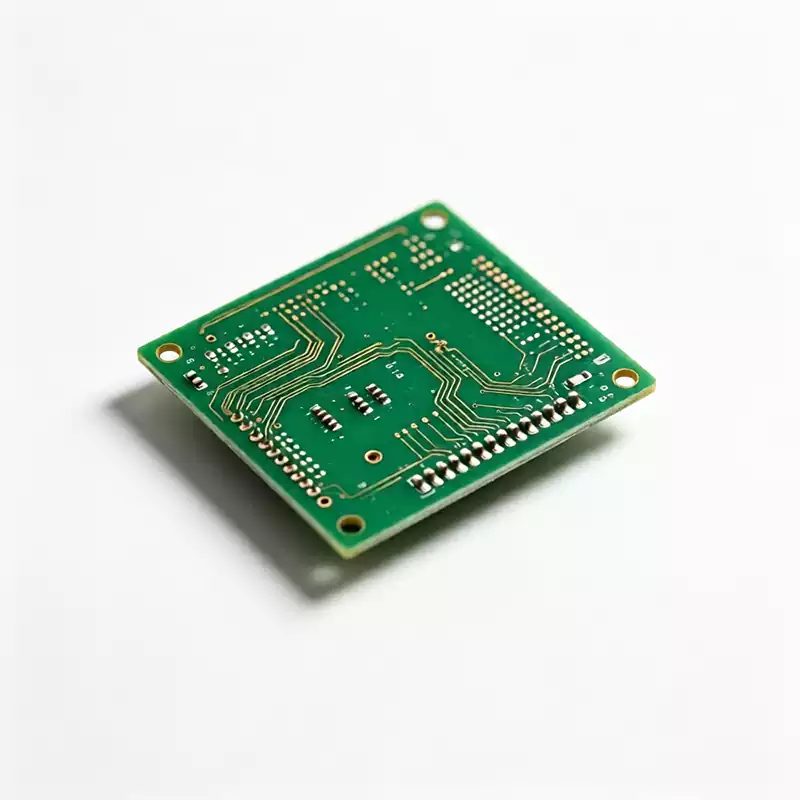
ENIG has a reputation as the premium pcb surface finish, and plenty of boards pay for it without using a single benefit it provides. For a large share of assemblies, hot-air solder leveling does the same job for less money. The finish decision is not about buying the best option on the list; it is about matching the pcb surface finish to what the assembly process actually demands. Choose wrong in either direction and you pay: too little finish and boards fail in assembly, too much finish and every unit carries margin nobody needed.
The decision comes down to three questions
Before comparing pcb surface finishes by name, answer three questions about the board’s life. What pitch will be placed on these pads? How many times will the board see reflow or wave soldering, and how long will it sit in storage first? What cost position does the product occupy? Almost every selection argument resolves into one of those three questions, and the answers point at a finish without needing a spreadsheet.
The pitch question decides whether flatness is a requirement or a luxury. The thermal question decides how much process tolerance the finish needs: a board that is assembled once in a controlled line faces a different life than one that goes through double-sided reflow and later rework, and each additional thermal excursion consumes part of the finish’s margin.
The storage question is the one most often skipped — boards that wait months between fabrication and assembly, or that sit as service stock, need a finish that survives storage without losing solderability, and that requirement alone eliminates some options regardless of pitch. The cost question then sizes the remaining choice: it tells you how much of the technical ideal you are willing to pay for.
The four common pcb surface finishes compared
| Finish | Cost position | Pad flatness | Storage tolerance | Multiple soldering passes | Typical fit |
|---|---|---|---|---|---|
| HASL | Lowest | Uneven, especially on fine pads | Long | Good | Through-hole and coarse-pitch assembly |
| ENIG | Higher | Flat | Long | Good | Fine-pitch and BGA-heavy designs |
| OSP | Low | Flat | Short | Limited | Cost-driven, single-pass assembly |
| Immersion tin | Moderate | Flat | Moderate | Moderate | Moderate pitch with flatness needs |
The table describes relative behavior, not specifications. Two suppliers implementing the same pcb surface finish will differ in details, and the datasheet of the chosen process always outranks a general comparison. What the table does reliably show is the shape of the trade: flatness and process tolerance cost money, and the question is whether your assembly can feel the difference.
Where each pcb surface finish earns its place
Fine-pitch and area-array designs are where flatness stops being cosmetic. Fine-pitch components and ball grids need consistent pad height across the array; an uneven surface translates into inconsistent solder volume, and inconsistent solder volume is where joints start to fail. This is the legitimate home of ENIG, and the reason it exists as a product.
Through-hole and coarse-pitch assemblies rarely need that flatness. When the largest component on the board has leads measured in millimeters, HASL’s surface profile is well inside the process window, and the cost difference is real money repeated on every board. Choosing ENIG here because it “sounds better” is one of the most common quiet cost leaks in assembly. HASL does carry two considerations worth knowing.
The lead-free alloy used in current production wets differently from its legacy tin-lead predecessor, so profiles are tuned rather than inherited. And the leveling process plunges the panel into molten solder, which puts brief thermal stress on thin or large boards — usually harmless, but worth a conversation when the panel is unusually thin or the design is mechanically sensitive.
Cost-driven, high-volume production often lands on OSP when the process allows it. OSP is inexpensive and flat, but it is the least forgiving of the four: storage life is shorter, and it tolerates fewer thermal excursions before it needs renewal. A product that is assembled soon after fabrication and sees one soldering pass is a good fit; a product that sits in a warehouse and survives rework is not. One operational detail matters more than its price suggests: OSP is a thin organic layer that is consumed by soldering heat, so boards that go through multiple passes or extended storage may need the treatment renewed before assembly, and that renewal is a scheduling item, not a free action.
Immersion tin occupies the middle ground — flat, reasonably robust, and cheaper than ENIG — and it suits designs that need flatness without the full ENIG price. It is less common than the other three, which occasionally makes it harder to source, and that supply question belongs in the decision rather than an afterthought. Two technical footnotes travel with it: tin-based finishes are the ones associated with whisker growth under certain conditions, a topic the industry has studied extensively and manages through process controls rather than avoidance; and immersion tin’s storage tolerance sits between OSP and ENIG, which makes it a reasonable answer for boards that need flatness and a few months of shelf life but not the full premium.
What the finish will not fix
No pcb surface finish compensates for a weak assembly process. ENIG will not rescue a poorly tuned reflow profile, and HASL is not the culprit when solder joints fail on a board whose stencil design was wrong. There is also a reliability conversation worth having honestly: ENIG’s own failure modes have been studied for decades, and the finish interacts with the nickel and gold layer thicknesses in ways that matter for some applications. The point is not that any finish is unsafe. The point is that finish selection is one variable in a system, and treating it as a quality dial misses how the system actually behaves.
Two practical notes belong beside that warning. First, moisture sensitivity is a property of the whole board, not the finish alone: components and laminate both carry moisture ratings, and a finish choice does not change the bake or floor-life discipline the assembly line needs. Second, whatever finish is chosen, it should be written into the fabrication notes and the quote package explicitly, because a finish left unspecified is a finish the supplier will choose for you — and that choice optimizes for their process, not your assembly.
Frequently asked questions
Is lead-free HASL always required now?
Not universally. Lead-free HASL is the default for most commercial production, but exemptions still exist for specific industries and applications, and the requirement ultimately follows the product’s market and regulatory obligations rather than the finish catalog. What is true either way is that the lead-free alloy changes the HASL process slightly, so the finish should be specified deliberately rather than inherited.
Does ENIG always cost more than HASL?
Almost always, yes, because it adds nickel and gold chemistry with its own throughput and material cost. The premium is the price of flatness and process tolerance. Whether that premium buys anything depends entirely on the pitch being assembled, which is why the selection starts with the assembly process and not with the price list. On high-volume orders the per-board difference is usually small in absolute terms, which is exactly when teams stop checking it — and when a few cents per board quietly becomes a line item worth reviewing.
Choosing a pcb surface finish is a matching exercise, not a ranking. Start with the pitch the assembly will place, then the number of thermal passes and storage the board will survive, then the cost position of the product. HASL serves coarse-pitch and through-hole work economically, ENIG earns its premium on fine-pitch and area-array boards, OSP fits cost-driven single-pass assembly with short storage, and immersion tin covers the flatness middle ground. Boards that get the finish they actually need stop paying for margin nobody uses.