Bare PCB storage is the controlled holding of an unassembled board until it reaches soldering. Surface finish and base material both degrade with time once the board leaves the production line, so storage conditions and elapsed time together decide whether a bare PCB still solderable when it reaches assembly. The surface finish sets the base shelf life, while package integrity and ambient temperature and humidity decide whether that life holds. A bare PCB held past its shelf life or stored in a failed package can delaminate or crack under reflow heat, and baking to remove absorbed moisture restores its usability before assembly.
Bare PCB storage life by surface finish
Bare PCB storage life follows the surface finish first. With the vacuum package intact and the warehouse held at 23 degrees Celsius plus or minus 3 and relative humidity at 55 percent plus or minus 10, common finishes have the following shelf lives.
| Surface finish | Shelf life in vacuum packaging |
|---|---|
| Immersion silver, immersion tin, OSP | about 3 months |
| ENIG, electroplated gold, silver plating | about 6 months |
| Hot air solder leveling | about 1 year |
The difference comes from how each finish resists oxidation. ENIG and hot air solder leveling form metal layers that stay chemically stable at room temperature and protect the copper below for longer. OSP is a very thin organic film that blocks contact between copper and air at room temperature but degrades gradually with time and heat, so it has the shortest life. Applying a conformal coating to a board with a shorter shelf life keeps out moisture and dust and resists oxidation, extending storage to about 9 months. Every figure above assumes the vacuum package stays unbroken, and suppliers’ own specifications take precedence.
Unopened boards should stay in their package. Once opened, a board falls under its floor life. For an OSP board held at 22 to 26 degrees Celsius and 45 to 55 percent relative humidity, all reflow passes should finish within 72 hours of opening. At 55 to 65 percent relative humidity the window drops to 48 hours, and above 65 percent it falls to 24 hours. The storage clock for a bare PCB restarts at the moment of opening, so shelf life inside the package and floor life after opening are two separate limits.
Environmental conditions and packaging for bare PCB storage
Bare PCB storage calls for 10 to 30 degrees Celsius and relative humidity no higher than 75 percent, with no direct sunlight and no acid, alkali, or corrosive gases. Warehouse stock should sit away from walls and off the floor in a dry, ventilated space. Moisture affects a bare PCB most directly because it attacks hole walls and surface metals and then degrades solder joints; the temperature and humidity swings of changing seasons shorten the usable life as well.
Manufacturers generally pack bare boards in vacuum bags with desiccant and a humidity indicator card, and place separator paper between boards to prevent scratches. The vacuum package keeps out air and water, protecting ENIG, hot air solder leveling, and pad surfaces from oxidation. Desiccant absorbs residual moisture inside the bag, and the indicator card tracks whether the package has failed. A torn or leaking package loses that protection and lets the bare PCB absorb moisture and oxidize slowly during storage.
Humidity card readings and bare PCB package failure
A humidity indicator card changes color to show the moisture state inside the bag, and users should confirm the reading before use. At incoming inspection the card should read no more than 40 percent. A higher reading means the moisture environment inside the package has gone out of control. A torn or leaking bag, missing desiccant, or a changed card each calls for action, and the batch cannot enter stock or assembly as normal.
When a humidity card on a bare PCB reads high, two routes are available. One sends the boards back to the supplier for rework, where the factory dries and repackages them. The other dries the boards on site before assembly. Factories generally do not bake OSP boards, since heat speeds up degradation of the organic film and oxidizes copper, so a damp OSP board usually goes back to the supplier. When incoming material or process problems make baking necessary, the user should obtain customer approval first. The card is therefore more than a packing accessory: it decides whether a batch can move straight into assembly and which recovery route it needs.
Moisture mechanisms and failure modes in bare PCB storage
Moisture damage in a bare PCB during storage appears mainly during reflow. The base material bonds epoxy resin with woven glass cloth and absorbs moisture by nature, so longer storage and higher humidity leave more water inside the board. As the bare PCB enters reflow and furnace temperature passes 100 degrees Celsius quickly, that water vaporizes and expands many times in volume. The vapor cannot escape fast enough and builds high pressure between layers, forcing them apart into blisters, delamination, or outright board cracking, which the industry calls the popcorn effect. In severe cases it tears metallized holes.
The resulting damage falls into visible and hidden categories. Visible failures appear as soon as the boards leave the furnace, including surface blisters, base delamination, and torn hole-wall copper, and they scrap the product outright. Hidden failures leave the outside intact while microcracks form inside. Once the board sits in a finished product, unstable function, leakage current, and CAF conductive anodic filament migration emerge after some time. These delayed failures are hard to locate, and repair and warranty costs far exceed the cost of moisture control at the front end. That is why bare PCB storage deserves more attention than a simple warehousing task.
Triggers for baking moisture-damaged bare PCBs
Baking removes absorbed water from a bare PCB. Whether a pcb board needs baking depends on package condition, storage time, and exposure. A torn or leaking package, missing desiccant or humidity card, a high humidity card reading, exposure past the floor life after opening, storage beyond the stated limit, more than 24 hours in ambient air, or relative humidity above 60 percent each calls for baking before the board goes online.
Manufacture date is the key input for that decision. An unopened board in an intact package with a short storage time can go straight into assembly. Once opened and held in a controlled environment for more than 5 days, the board needs new baking conditions based on how long it has been stored. Boards stored beyond 12 months should not enter volume production; if use is unavoidable, a small trial build should confirm the soldering result before releasing the batch.
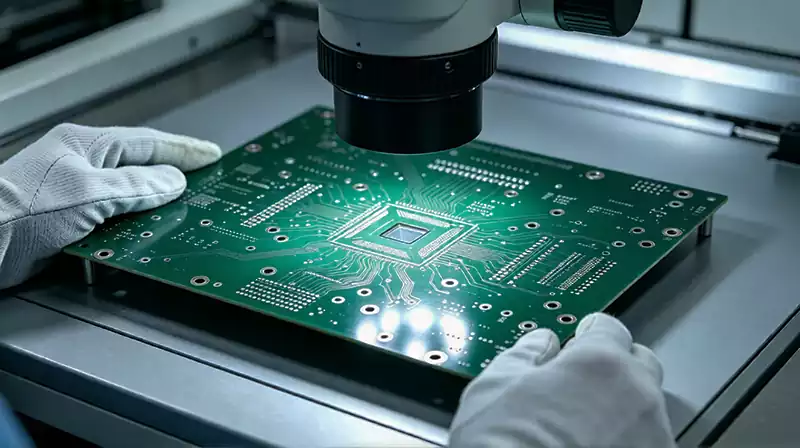
Bare PCB baking temperature, duration, and material limits
Baking temperature and time for a bare PCB follow the actual storage duration, commonly based on 120 degrees Celsius plus or minus 5.
| Storage state | Baking condition |
|---|---|
| Made within 2 months, opened and held over 5 days in a controlled environment | 120 ±5℃, 1 hour |
| Stored 2 to 6 months | 120 ±5℃, 2 hours |
| Stored 6 to 12 months | 120 ±5℃, 4 hours |
| Stored beyond 12 months, not advised for volume use | 120 ±5℃, 6 hours, trial solder first |
| OSP board that needs drying because of incoming material problems | 105 ±5℃, no more than 2 hours, customer approval required |
Baking temperature has an upper bound. It must stay below the glass transition temperature of the laminate, and shop-floor practice generally caps it at 125 degrees Celsius. Older leaded laminates have a lower glass transition temperature, while lead-free grades usually exceed 150 degrees Celsius, yet baking still runs at 120 degrees Celsius to avoid heat damage to the base material. OSP boards use the lower 105 degrees Celsius for no more than 2 hours because the organic film is heat sensitive and longer baking speeds up copper oxidation.
Heating and cooling methods affect the outcome as well. A stepped, gradual ramp works best for moisture removal, with the rate held at 5 to 10 degrees Celsius per minute to avoid warpage from a sudden temperature jump. After baking, the boards should cool naturally in the oven to below 60 degrees Celsius before removal. Large boards lie flat in stacks of no more than 30, and medium or small boards in stacks of no more than 40, or stand upright. The oven needs an exhaust and dehumidifying mechanism, since trapped vapor raises the humidity inside and weakens the drying result.
Post-baking use window and handling of bare PCBs
Baking only removes moisture. A bare PCB exposed to shop-floor air absorbs it again, so assembly is normally required within 5 days of baking. Boards still unused after 5 days need another hour at 120 degrees Celsius plus or minus 5 before reprocessing. OSP boards have a tighter window and must complete production within 24 hours of baking. Boards held for later use should go back into vacuum packaging quickly to keep out ambient moisture.
Record keeping is part of bare PCB storage management as well. Baking records should capture the manufacture date and the time and temperature of oven entry and exit, with the drying pre-bake scheduled within 8 hours before soldering. Stock boards without a baking record should not enter reflow. That discipline keeps batches from skipping moisture removal and cracking in the furnace.
Common questions about bare PCB storage and baking
Does a bare PCB in an intact vacuum package still need baking. A board made recently in a well-sealed package can go straight into use. Whether to bake before assembly depends on exposure time after opening and ambient humidity; exposure beyond 24 hours or relative humidity above 60 percent calls for baking.
Can a damp OSP board be baked at high temperature on site. Generally no. The OSP film is heat sensitive, and baking speeds up copper oxidation and lowers solderability, so a damp board usually goes back to the supplier for rework. When incoming problems make treatment necessary, a milder cycle of 105 degrees Celsius plus or minus 5 for no more than 2 hours applies, with customer approval.
Can a bare PCB past its shelf life still be used. Engineers can evaluate boards with metal finishes such as ENIG and hot air solder leveling after drying them and confirming the joint with a small trial solder. OSP boards usually return to the supplier because the film degrades irreversibly with time, and boards stored beyond 12 months should not enter volume production.
Bare PCB storage life follows the surface finish, and packaging and environment decide whether that life holds. Baking restores solderability lost to moisture, but it cannot reverse a film that has already degraded, so the boundary for returning an expired board to rework rests on that distinction.