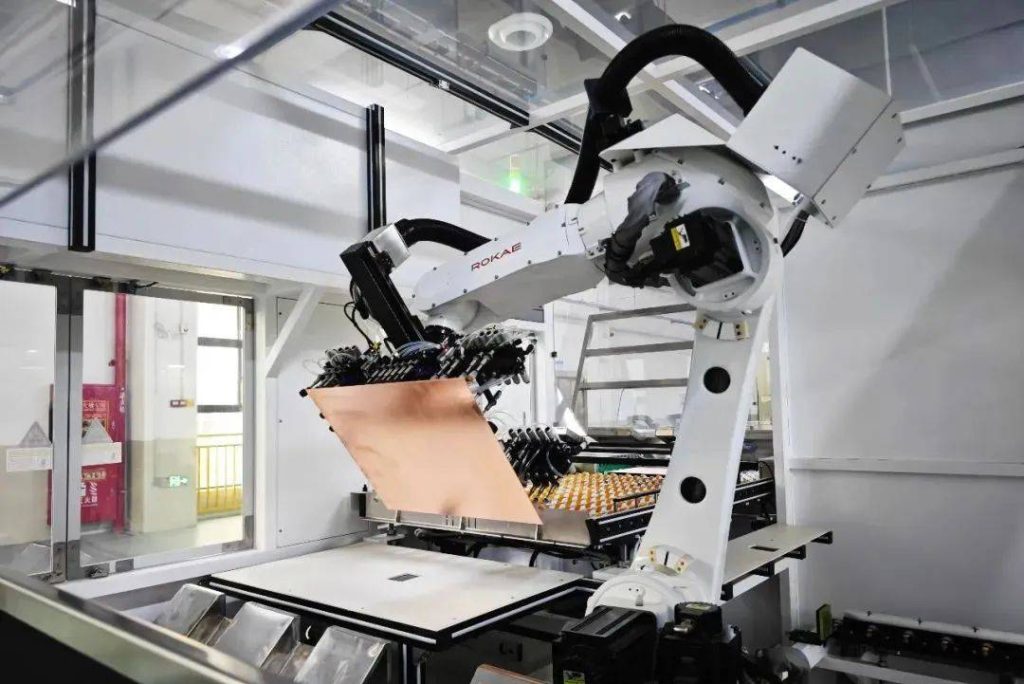
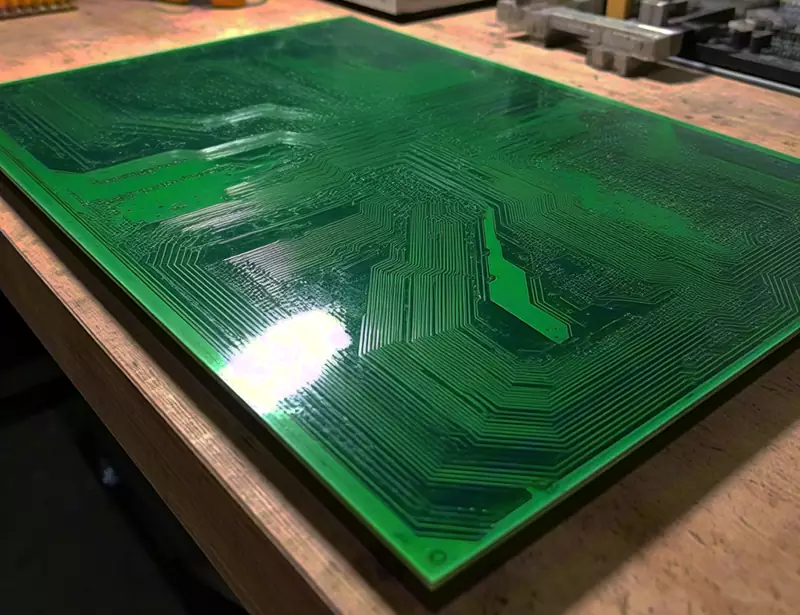
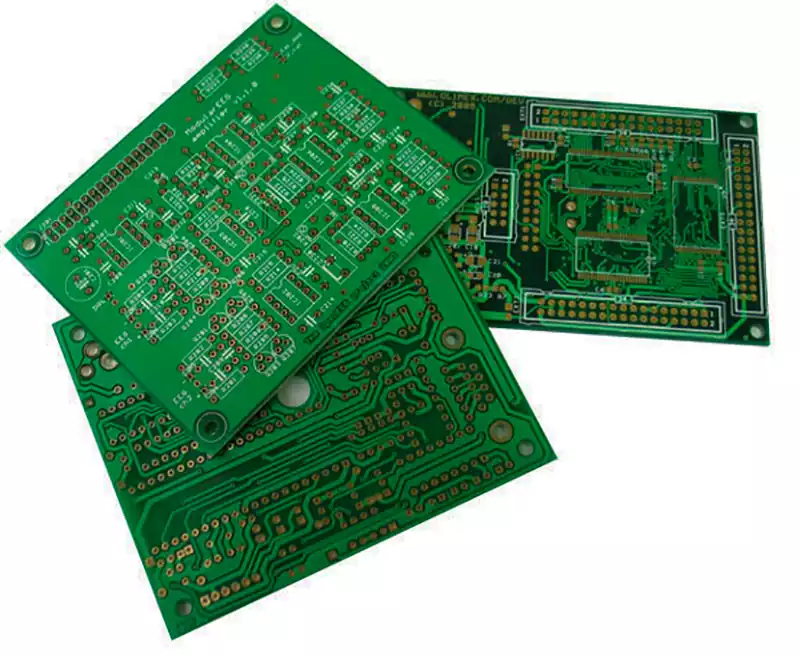
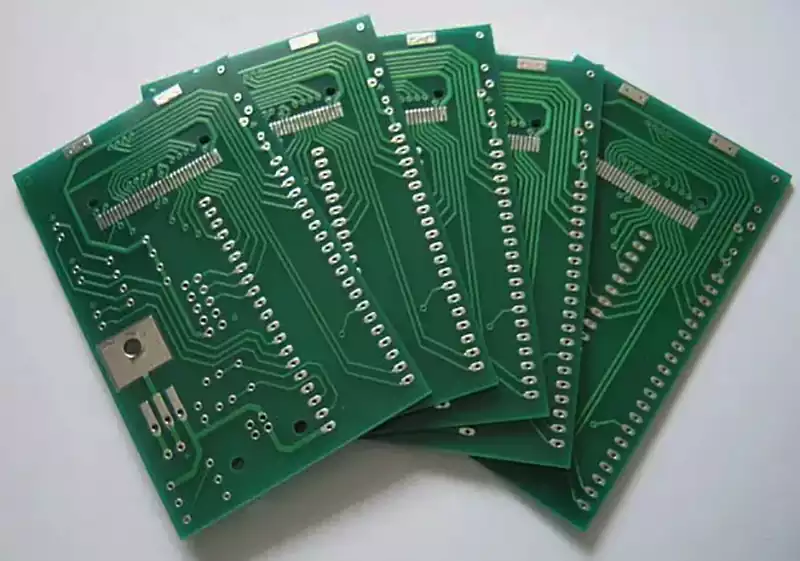
A motherboard is a highly complex and integrated printed circuit board (PCB), which specifically refers to the mainboard installed inside core devices such as personal computers (desktops and laptops), servers and high-end workstations. Unlike daughterboards and expansion boards that only perform single independent functions, a mainboard does not execute single dedicated computing tasks, but undertakes physical fixation of all internal hardware, circuit interconnection, signal transmission, power distribution and coordinated scheduling of the whole machine.
In terms of physical form, most motherboards adopt a regular rectangular PCB layout, with precision copper circuit traces, various integrated chips, slots, connectors and power supply modules integrated on its surface. It is the largest and structurally most complex base hardware inside a device. All core computing, storage and peripheral hardware rely on the mainboard to obtain power supply, realize data communication and coordinate operation. Serving as the fundamental prerequisite for the normal operation of a complete electronic device, the mainboard is known as the central nervous system and hardware cornerstone of electronic equipment.
Core Components of Motherboards
Core Chip Module
This module consists of chipset, BIOS chip, I/O control IC and power management IC. The chipset acts as the core logic hub of a mainboard, governing data transmission and instruction scheduling among CPU, memory and graphics card, and determining the performance specifications and hardware compatibility range of the motherboard. The BIOS chip stores low-level boot firmware of the device and takes charge of power-on self-test, system boot and basic hardware parameter configuration. The power management IC accurately distributes voltage and current to guarantee stable power supply for all hardware components.
Core Hardware Slots
Main types include CPU sockets, memory DIMM slots, PCIe expansion slots and storage connectors. The CPU socket mechanically fixes the central processing unit and serves as the carrier of core computing hardware. Memory slots accommodate random access memory and define the maximum cache capacity of the device. PCIe slots support expansion of discrete graphics cards, network interface cards, audio adapters and other hardware to expand device functions. Storage connectors interface solid-state drives and hard disk drives to implement persistent data storage.
External I/O Interfaces
These cover USB ports, HDMI/DP video ports, Ethernet jacks, audio jacks, serial ports and parallel ports. They are mainly used to connect external peripherals including mice, keyboards, monitors, headsets, network cables and portable storage devices to realize input, output and external expansion functions of the device.
Power Delivery and Circuit Module
Composed of power capacitors, inductors, MOSFETs and main power connectors, this module forms a multi-phase power delivery system. It supplies stable and clean power to core hardware such as CPU, memory and chipset, eliminating system crashes, unexpected reboots and component damage caused by voltage fluctuations, and acts as the core guarantee for motherboard stability.
Auxiliary Functional Module
It includes clock oscillators, status indicator LEDs, configuration jumpers and thermal heatsink brackets. Clock oscillators provide a unified operating clock frequency for all system hardware to ensure synchronous data transmission. Jumpers allow manual adjustment of hardware operating parameters. Heatsink brackets dissipate heat generated by the chipset and power delivery modules to prevent thermal throttling and hardware failures induced by excessive temperature.
Core Functions of Motherboards
Physical Mounting and Fixation
A motherboard provides dedicated mounting positions for all internal hardware including CPU, memory, storage drives, graphics cards and various integrated circuits. It firmly secures each component via slots and solder joints, integrates scattered discrete hardware into a complete hardware architecture of the device, and acts as the physical supporting substrate for all electronic assemblies.
Circuit Interconnection and Signal Transmission
Precision copper traces etched on the mainboard build a full-system circuit and signal network to realize intercommunication among all hardware units. All computing instructions from the CPU, cached data stored in memory, persistent data on storage drives and input signals from peripherals are transmitted, exchanged and synchronized through motherboard circuitry, unifying independent hardware modules into a coordinately operating whole.
Power Distribution and Voltage Regulation
After power is input from an external power supply unit, electricity is first delivered to the motherboard. Its built-in power delivery system performs voltage reduction, stabilization and current shunting, distributing power precisely in accordance with the rated voltage and current requirements of each hardware component. Meanwhile, it filters electrical noise to avoid hardware faults triggered by unstable power supply and supports long-term stable operation of the whole system.
Hardware Scheduling and Compatibility Control
Relying on the chipset and BIOS firmware, the motherboard uniformly manages the operating status of all hardware, regulates hardware operating frequencies and data transmission priorities, and coordinates the operation rhythm of CPU computation, memory read-write cycles, storage access and peripheral response. In addition, it defines hardware compatibility boundaries to ensure matched component specifications and orderly operation, avoiding hardware conflicts and compatibility errors.
Support for Function Expansion and Hardware Upgrade
Reserved expansion slots and external I/O ports on the mainboard lay a foundation for function upgrade and expansion of the device. Users can install high-end discrete graphics cards and high-speed NICs through PCIe slots, expand RAM capacity via memory slots, and connect various peripherals through external ports, which greatly extends the service life of the device and improves its functional adaptability.
Classification of Motherboards
Classification by Application Scenario
Consumer-grade mainboards are designed for desktops, laptops, all-in-one PCs and household smart terminals. They feature lightweight design and high cost performance, matching daily office, entertainment and light graphic design demands. With moderate integration level, sufficient expandability for basic civilian use, streamlined structure and low power consumption, they meet mainstream household requirements. Laptop motherboards adopt ultra-high integration; most hardware components are directly surface-mounted on PCB to achieve compact dimensions fitting notebook chassis structures.
Server-grade motherboards are custom-made for data centers and cloud computing servers, with core design focuses on stability, fault tolerance and multi-hardware compatibility. They support multi-socket CPUs, ultra-large-capacity memory and multi-disk RAID arrays, and are equipped with redundant power supply, dual Ethernet ports and hardware error correction functions. Capable of 7×24-hour non-stop operation without downtime, their hardware specifications and reliability far exceed those of consumer-grade motherboards.
Industrial-grade mainboards are applied to industrial PCs, automated production equipment, CNC machine tools, on-board devices and IoT terminals. They deliver dustproof, shock-resistant, high-temperature resistant, anti-interference and wide-temperature operating performance to adapt to harsh industrial environments. With outstanding stability and noise immunity, they support long-term continuous operation to satisfy industrial automation control requirements.
Embedded motherboards feature compact size and ultra-high integration, mainly used for smart home devices, wearable electronics, surveillance cameras and miniature smart terminals. Their highly condensed hardware layout removes redundant expansion interfaces, realizing ultra-low power consumption and compact form factors to fit lightweight design demands of small intelligent devices.
Classification by Form Factor
ATX full-size boards are the mainstream standard form factor for desktop PCs. With large dimensions, fully populated slots, connectors and power delivery modules, they offer strong expandability and sufficient thermal headroom, suitable for high-performance office, gaming and content creation hosts, and remain the primary choice for custom PC assembly.
MATX compact boards have smaller dimensions than ATX boards, with partial expansion slots trimmed while retaining all core functions. Featuring high cost performance, they fit mid and small chassis and satisfy most household and office computing demands with balanced space utilization and practicality.
ITX mini boards are ultra-compact designs developed for mini chassis and portable hosts. High integration minimizes footprint at the cost of limited expandability, focusing on lightweight, silent and space-saving performance for residential desktop and small office scenarios.
Classification by Integration Level
Integrated motherboards carry onboard graphics, audio and network controllers. Users can obtain complete device functions without additional expansion cards. Cost-effective and suitable for basic entry-level civilian scenarios, they dominate the entry-level consumer hardware market.
Discrete motherboards do not integrate core functional controllers onboard and need to work with discrete graphics cards and professional NICs. Equipped with upgraded power delivery specifications and enhanced expandability, they cater to high-end scenarios including high-performance gaming, professional graphic design and industrial computing.
Mainstream Application Fields of Motherboards
Consumer Electronics Sector
This category covers civilian equipment such as desktops, laptops, all-in-one PCs, tablets, smart TVs, smart home hubs and game consoles. Consumer motherboards prioritize lightweight layout, broad compatibility and low power consumption to meet basic daily office, entertainment and learning demands of mass users, making them the most widely adopted motherboard type.
Industrial Automation Sector
Industrial-grade motherboards are deployed in industrial control computers, automated production lines, CNC machine tools, industrial robots, inspection equipment and logistics sorting machinery. With exceptional environmental adaptability and stability, they operate reliably under harsh industrial conditions featuring high temperature, dust, vibration and electromagnetic interference to guarantee continuous stable running of industrial equipment.
Internet and Data Service Sector
Server-grade motherboards serve as core hardware for cloud computing servers, data center mainframes, storage servers, network switches and gateways. Their high stability, massive concurrent processing capacity and hardware fault tolerance support mass data storage, transmission and computation, forming the hardware foundation of internet, big data and cloud computing industries.
Intelligent Transportation and On-Board Electronics Sector
Special automotive mainboards are applied to vehicle infotainment hosts, car navigation systems, autonomous driving terminals, traffic monitoring equipment and intelligent traffic light control systems. They possess shock resistance, wide high-low temperature tolerance and EMI shielding capability to adapt to complex operating environments of vehicle travel and outdoor traffic infrastructure.
Security and Internet of Things Sector
Embedded motherboards are used for surveillance mainframes, NVR storage devices, IoT gateways, smart access control panels and environmental monitoring terminals. Their compact size, ultra-low power consumption and consistent stability fit various miniature intelligent endpoints and support data collection, transmission and linkage functions of IoT systems.
Medical and Precision Instrument Sector
Special medical-grade motherboards are deployed in medical diagnostic equipment, precision laboratory instruments and lab intelligent terminals. Featuring high measurement accuracy, low electrical noise and superior stability, they ensure precise data sampling and computation of precision equipment for high-precision medical treatment and scientific research scenarios.
Key Technologies of Motherboards
Multi-Phase Power Delivery Technology
High-end motherboards adopt digital multi-phase power delivery architectures. Compared with traditional single-phase power supply designs, they enable precise dynamic power regulation, reduce thermal generation of power circuits and improve power rail stability. They support sustained high-frequency CPU operation under full load and effectively avoid thermal throttling and system crashes.
High-Speed Signal Transmission Technology
Equipped with the latest PCIe, SATA and USB high-bandwidth communication protocols, motherboards realize high-throughput data transfer for high-performance graphics cards, solid-state storage and external peripherals, drastically cutting signal latency and boosting transmission speed to meet the demands of high-speed computing and mass storage.
Intelligent Thermal Control and Cooling Technology
On-board thermal monitoring ICs track hardware temperatures in real time and dynamically adjust fan speeds. Combined with auxiliary cooling structures such as thermal armor and thermal interface pads, the system achieves precise temperature control balancing heat dissipation efficiency and low noise output, preventing permanent hardware damage caused by overheating.
Hardware Protection and Anti-Interference Technology
Premium industrial and server-grade motherboards integrate lightning surge protection, ESD protection, surge suppression and full EMI shielding technologies, together with dustproof, moisture-proof and shock-resistant mechanical structures, greatly enhancing equipment stability and service life under complex operating environments.
Intelligent BIOS Tuning Technology
Graphical visual BIOS firmware supports customized adjustment of hardware parameters, enabling users to complete overclocking, power limit configuration, fan curve setting and hardware boot priority assignment. It also integrates power-on self-test, hardware fault alarm and fast system boot functions to improve system tunability and operational reliability.
Common Faults and Routine Maintenance Guidelines
Common Fault Types
Typical motherboard malfunctions include no power-on response, hardware detection failures, frequent crashes and restarts, malfunctioning I/O ports and blue-screen errors. Most faults stem from unstable power supply, accumulated dust, loose connectors, electrostatic chip damage and long-term thermal aging. Severe catastrophic faults such as burnt ICs, circuit burnout and PCB trace open circuits are generally induced by overvoltage, liquid ingress or physical impact.
Routine Maintenance Skills
Regularly clear dust accumulated on the motherboard to prevent poor heat dissipation and electrical short circuits caused by dust buildup; maintain unobstructed airflow during equipment operation to avoid long-term high-temperature runtime; cut off main power before plugging or unplugging peripherals and internal hardware to prevent ESD breakdown of integrated chips; avoid exposing the device to violent vibration, liquid contact and humid environments; periodically power on long-idle equipment to slow circuit oxidation and component aging.
Industry Development Trends of Motherboards
High integration, miniaturization and lightweight design become mainstream; embedded motherboards integrate more functional modules to match miniature intelligent terminals.
High-speed and low-latency design to satisfy high-performance computing and mass data transmission demands; continuous iteration of high-bandwidth transmission protocols to reduce signal delay.
Full popularization of intelligent power regulation, intelligent thermal control and automatic hardware fault self-diagnosis technologies to cut device power consumption and elevate operation and maintenance efficiency.
Improved environmental adaptability and long-term stability for industrial and automotive motherboards to fit more extreme complex scenarios; modular hardware design simplifies hardware upgrade and field repair procedures.
As the core nerve center and hardware foundation of all electronic equipment, motherboards act as an indispensable prerequisite for the normal operation of every intelligent device. With continuous technological iteration and upgrading, mainboards will keep evolving toward higher intelligence, faster transmission speed, stronger stability and more compact lightweight form factors, continuously empowering intelligent transformation across all industrial sectors.