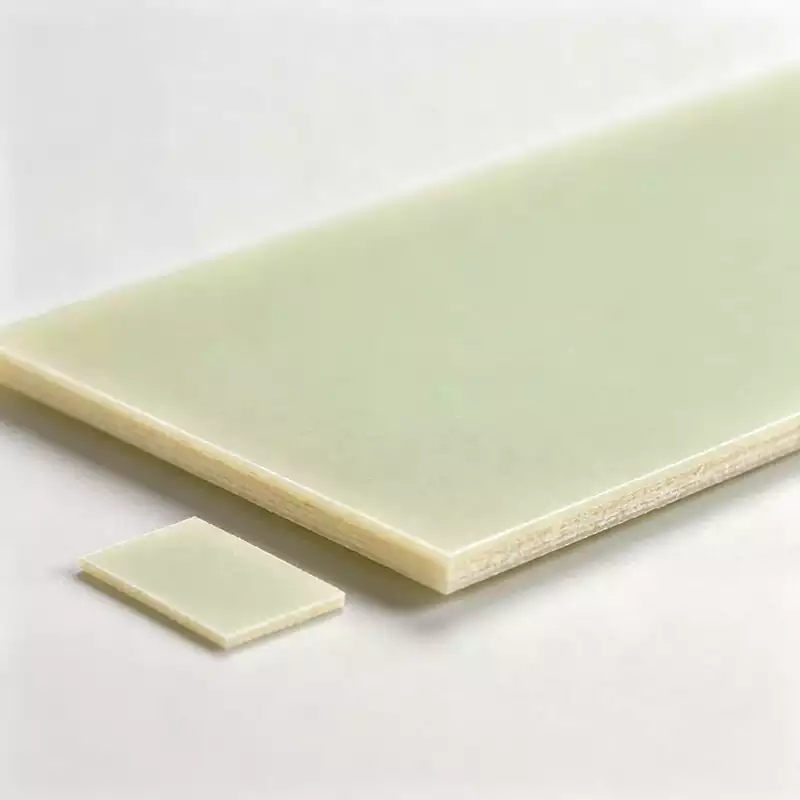
FR-4 glass-fiber reinforced epoxy laminate is the most widely used base material for printed circuit boards (PCBs). Its material properties have a significant influence on the reliability, electrical insulation, mechanical stability, and long-term durability of electronic assemblies. Because electronic products operate under different environmental and electrical conditions, FR-4 laminates are available in multiple grades based on key performance indicators such as heat resistance, flame-retardant performance, and functional enhancements. Each category differs in resin chemistry, production technology, physical properties, and intended applications.
Classification by Glass Transition Temperature (Tg)
Glass transition temperature (Tg) is one of the primary indicators of the thermal capability of an FR-4 laminate. It defines the temperature at which the epoxy resin changes from a rigid glass-like state to a softer rubber-like state. Since this transition directly affects dimensional stability, mechanical strength, and insulation performance at elevated temperatures, Tg is a critical factor in PCB material selection. FR-4 materials are generally grouped into three Tg grades.
Standard Tg FR-4
Standard Tg FR-4 typically offers a glass transition temperature of approximately 130°C to 140°C. It is the most economical and commonly used PCB substrate for conventional electronic products. Produced with standard epoxy resin systems, it provides dependable electrical insulation, sufficient mechanical strength, and excellent manufacturability for everyday electronic applications.
Although it performs well under normal operating conditions, continuous exposure to elevated temperatures may accelerate material expansion, reduce structural stability, and increase the risk of deformation. For this reason, it is generally unsuitable for products subjected to frequent high-temperature soldering cycles or sustained thermal stress.
Typical applications include consumer electronics, household appliances, digital products, and other standard electronic equipment.
Mid-Tg FR-4
Mid-Tg FR-4 generally has a Tg value ranging from 150°C to 170°C. Improved resin formulations and optimized fiberglass processing provide noticeably better thermal performance than standard-grade materials.
With a lower coefficient of thermal expansion (CTE), this material offers enhanced resistance to board warpage, delamination, and dimensional changes during repeated heating and cooling cycles. It performs reliably during common PCB assembly processes such as reflow soldering and wave soldering while maintaining stable operation at continuous temperatures of approximately 120°C to 150°C.
Because it combines higher thermal reliability with reasonable cost, Mid-Tg FR-4 is frequently selected for industrial electronics, automotive control systems, intelligent home devices, and other products requiring improved heat resistance.
High Tg FR 4
High Tg FR 4 features a glass transition temperature of 170°C or above and is intended for high-performance electronic applications operating under demanding thermal conditions. It utilizes advanced heat-resistant epoxy systems together with highly optimized curing structures to maximize thermal stability.
Its low thermal expansion greatly reduces the likelihood of board distortion, resin cracking, and layer separation during repeated heating cycles. In addition, its dielectric insulation remains stable during long-term exposure to high temperatures, allowing the laminate to withstand multiple lead-free soldering processes without significant degradation.
High Tg FR-4 is commonly employed in automotive power electronics, 5G communication equipment, industrial power supplies, new energy systems, and high-power LED applications.
Classification by UL94 Flame-Retardant Rating
Fire resistance is another important property of FR-4 laminates. The UL94 flammability standard evaluates how materials behave when exposed to flame, including self-extinguishing capability, burning duration, molten dripping, and flame propagation. Compliance with UL94 ratings is essential for safety certification across many electronic industries.
UL94 V-0 FR-4
UL94 V-0 is the standard flame-retardant rating adopted by most commercial FR-4 PCB materials.
Under the UL94 vertical burn test, V-0 materials extinguish themselves within ten seconds after each ignition cycle and do not produce burning droplets capable of igniting nearby materials. Once the flame source is removed, combustion does not continue.
These characteristics provide effective protection during temporary electrical faults such as overloads and short circuits. Consequently, UL94 V-0 FR-4 has become the preferred material for the majority of commercial and industrial PCB products because it delivers a practical combination of safety, performance, and manufacturing cost.
UL94 5VA and 5VB FR-4
UL94 5VA and 5VB represent more demanding fire-resistance classifications than V-0 and are designed for products operating in environments with strict fire protection requirements.
These laminates employ high-performance flame-retardant technologies that significantly improve resistance to direct flame exposure. They exhibit minimal flame spread, resist dripping during combustion, and maintain structural stability even after prolonged heating.
Such materials are widely used in aerospace electronics, medical equipment, industrial protection systems, battery energy storage, and other mission-critical electronic devices requiring exceptional fire safety.
Classification by Functional Performance
Besides thermal capability and flame resistance, FR-4 laminates can also be engineered for specialized applications through modified resin systems, functional additives, and manufacturing process improvements. These enhanced materials are designed to satisfy specific performance requirements including signal integrity, environmental protection, and thermal dissipation.
General-Purpose FR-4
General-purpose FR-4 provides a well-balanced combination of electrical insulation, mechanical durability, corrosion resistance, and flame retardancy without focusing on any single specialized characteristic.
Its reliable processing performance makes it suitable for conventional PCB manufacturing operations such as drilling, multilayer lamination, chemical etching, and solder assembly.
This material is commonly found in desktop computers, household appliances, consumer electronics, and standard industrial control equipment.
High-Frequency FR-4
High-frequency FR-4 is developed specifically for radio-frequency (RF) circuits and high-speed digital systems where signal quality is critical.
Compared with conventional FR-4, it offers more stable dielectric constant (Dk) and lower dielectric loss (Df) over a broad frequency range. These improvements reduce insertion loss, signal attenuation, phase variation, and impedance instability, thereby preserving signal integrity at high operating frequencies.
High-frequency FR-4 is widely applied in wireless communication devices, RF modules, 5G and 6G infrastructure, microwave systems, and other high-speed electronic products.
Halogen Free FR4
Conventional FR-4 materials often achieve flame retardancy through brominated or chlorinated additives. During combustion, these substances may generate corrosive and environmentally harmful gases, including hydrogen halides and dioxins.
Halogen free FR4 replaces traditional halogen-containing compounds with environmentally friendly phosphorus-based and nitrogen-based flame-retardant systems. As a result, the material contains no intentionally added chlorine or bromine while meeting global environmental standards such as RoHS and REACH.
In addition to reducing toxic emissions during combustion, halogen free FR4 maintains excellent insulation, mechanical properties, and fire resistance. It is commonly selected for environmentally regulated products including export electronics, children’s electronic devices, premium consumer appliances, and renewable energy equipment.
High Thermal Conductivity FR-4
The relatively low thermal conductivity of conventional FR-4 limits its ability to dissipate heat generated by high-power electronic components. Excessive operating temperatures may negatively affect circuit performance and shorten component lifespan.
High thermal conductivity FR-4 improves heat transfer by incorporating thermally conductive ceramic fillers such as aluminum oxide (Al₂O₃) or aluminum nitride (AlN) into the epoxy resin. These fillers create more efficient thermal pathways that rapidly transfer heat away from power semiconductors, integrated circuits, MOSFETs, and other heat-producing devices.
Improved heat dissipation helps lower PCB operating temperatures, enhances overall system reliability, and extends the service life of electronic components.
High thermal conductivity FR-4 is widely utilized in switching power supplies, photovoltaic inverters, electric vehicle charging equipment, industrial power converters, and other high-power electronic systems where thermal management is a key design requirement.