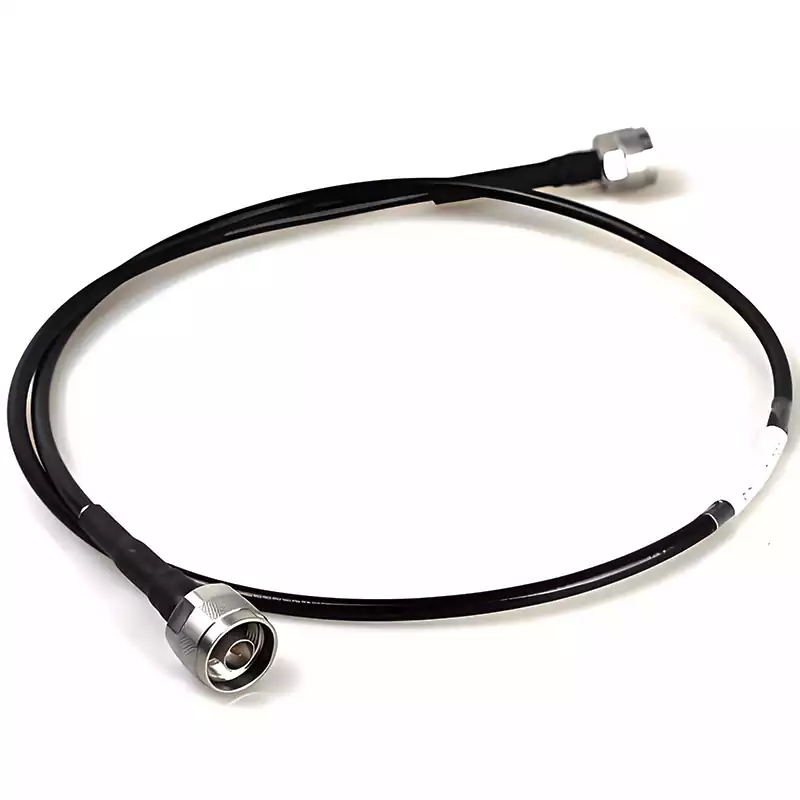
What Is an RF Cable for TV?An RF cable for TV is a coaxial cable, typically with a 75-ohm characteristic impedance, that carries radio-frequency television signals from an antenna, cable TV outlet, or other RF source to the RF or antenna input on a television. In a typical setup, the cable connects the signal source to the TV’s built-in tuner, which receives and processes the incoming broadcast or cable signal.
If you look at the back of a television, this connection may be labeled RF IN, ANT IN, ANT/CABLE IN, or AIR/CABLE. It usually looks like a round threaded connector, and in many systems the cable uses an F-type connector. When an antenna or cable service is connected through this port, the RF signal travels through the coaxial cable into the TV tuner, where the television identifies and decodes the available channels.
How Does an RF Cable Work with a TV?
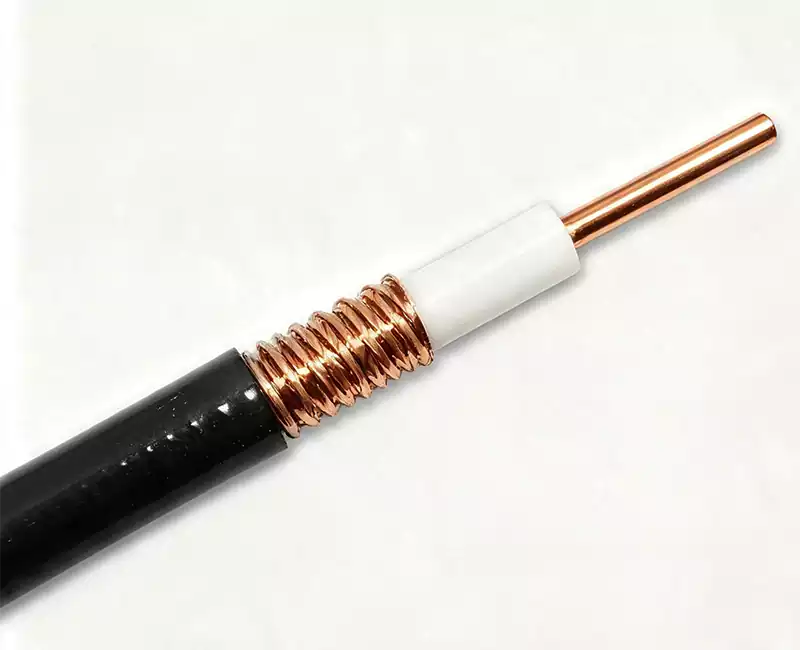
The role of an RF cable is to transport a high-frequency electrical signal while keeping the signal path controlled and protected from unwanted interference. A coaxial cable normally consists of a central conductor, a dielectric insulating layer, an outer conductive shield, and a protective jacket. The central conductor carries the RF signal, while the surrounding shield helps contain the electromagnetic field and provides protection against external interference.
This coaxial construction is particularly useful for television because broadcast and cable television signals operate at radio frequencies rather than at the low frequencies used by ordinary electrical wiring. The cable therefore needs to maintain suitable electrical characteristics as the signal travels from the source to the television. Electronics Notes identifies coaxial cable as a common transmission line for domestic radio and television systems and notes that 75Ω is the standard characteristic impedance used for these applications.
The complete signal path is usually quite simple:
Antenna or cable source → RF coaxial cable → TV RF input → TV tuner
The cable does not decide which television channel you watch. Its job is to transport the RF signal to the tuner with as little unwanted loss or interference as reasonably possible.
Where Is the RF Cable Connected on a TV?
The RF cable connects to the television’s antenna or RF input. Depending on the TV manufacturer and region, the connector may be marked RF IN, ANT IN, ANT/CABLE, or AIR/CABLE.
For example, Sony identifies RF or coaxial inputs as connections for an indoor or outdoor antenna or a cable TV service. A typical TV installation using a modern antenna therefore looks like this:
TV antenna → 75-ohm coaxial cable → ANT IN on the TV
For cable television without a separate set-top box, the connection can be:
Cable TV outlet → 75-ohm coaxial cable → ANT/CABLE IN on the TV
TV documentation from LG and other manufacturers specifically describes this type of 75 ohm RF cable connection.
Why Is a TV RF Cable Usually 75 Ohms?
The 75-ohm characteristic impedance is one of the most important specifications of an RF cable used for television. It is not simply a resistance rating of the cable. Characteristic impedance describes the electrical behavior of the transmission line as a signal travels through it, and it depends on factors such as the geometry of the conductors and the dielectric material between them.
Television and video systems commonly use 75-ohm coaxial cable, while many professional RF and wireless communication systems use 50-ohm coaxial cable. Electronics Notes identifies 75Ω as a common impedance for domestic television and Hi-Fi RF signal leads.
Using a cable with the appropriate impedance helps maintain compatibility between the source, transmission line, and receiving equipment. For a conventional TV antenna or cable connection, this is why a 75-ohm coaxial cable is normally the appropriate choice.
Is an RF Cable the Same as a Coaxial Cable?
In everyday TV terminology, people often use RF cable and coaxial cable to describe the same cable, but technically they refer to different characteristics.
Coaxial cable describes the physical construction of the cable. It has a central conductor surrounded by an insulating dielectric and an outer conductive shield. RF cable describes its intended use for carrying radio-frequency signals.
A coaxial cable can therefore be used for many different applications, while an RF cable is being described primarily in terms of the signal it carries. In a television system, the two terms overlap because TV RF signals are commonly transmitted through 75-ohm coaxial cable.
So, when someone asks for an RF cable for TV, they will usually be referring to a 75-ohm TV coaxial cable.
What Does a TV RF Cable Connect To?
The most common use is to connect a television to an antenna or cable TV source.
With an over-the-air antenna, the antenna receives radio signals transmitted by television stations and converts them into electrical RF signals. The coaxial cable then carries those signals to the television’s tuner. A television antenna system therefore depends on the cable as part of the transmission path between the antenna and the receiver.
With a cable TV service, the RF signal reaches the home through the cable network and can be connected directly to a compatible television or to a set-top box, depending on the service configuration.
RF cables can also be used in other television distribution systems, including installations where an RF signal is distributed from one source to multiple televisions.
What Connector Does an RF TV Cable Use?
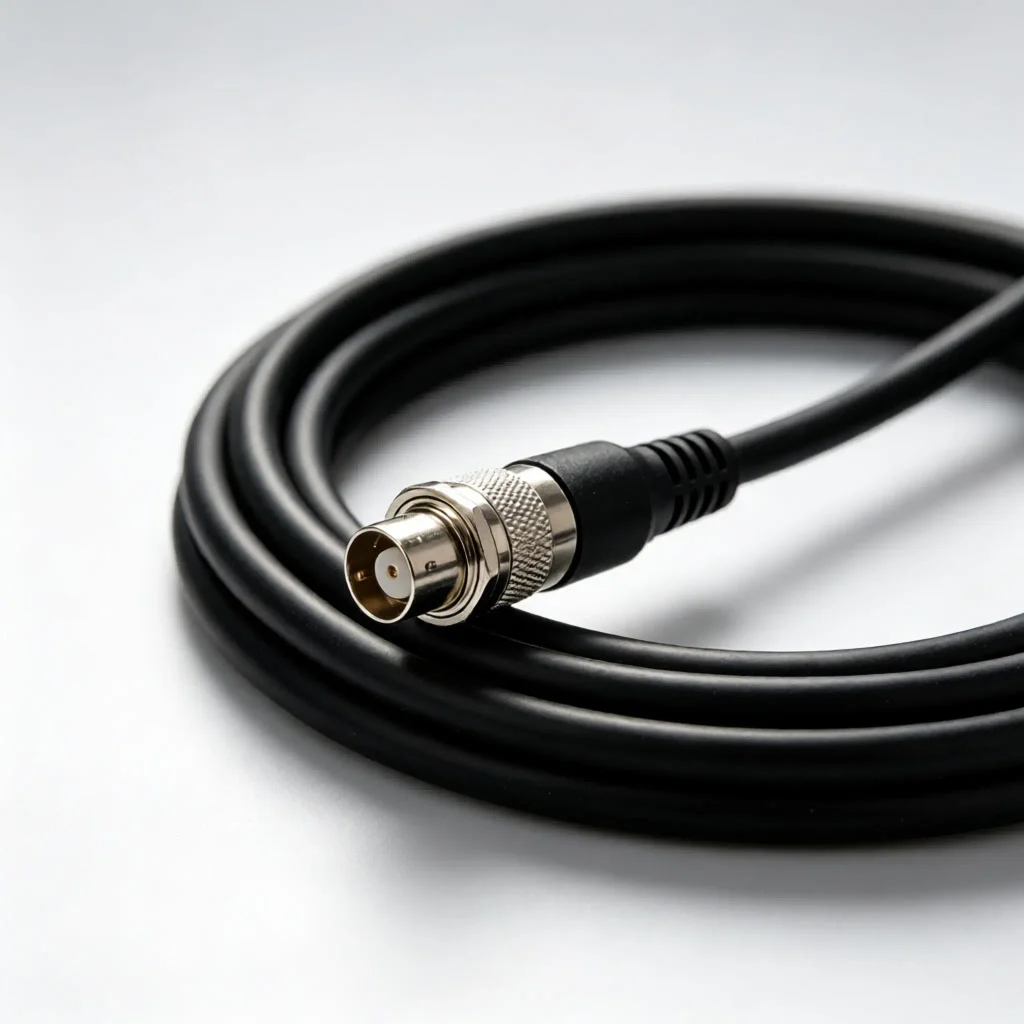
A common connector for a 75 ohm TV coaxial cable is the F-type connector. It is the threaded connector that screws onto the corresponding threaded RF input on many televisions and other consumer RF equipment.
TV installation documentation from Sharp specifies a 75 ohm coaxial cable with an F-type connector for antenna connections. LG documentation similarly describes the RF cable as having a threaded end that connects to the antenna/cable jack on the TV.
Not every television system uses exactly the same connector, however. The connector can vary by region and equipment design, so the TV’s actual input should be checked before purchasing or assembling a cable.
Can an RF Cable Be Used with a Smart TV?
Yes. A Smart TV can still use an RF cable when you want to receive television signals from an antenna or compatible cable service.
Being a Smart TV simply means that the television also provides functions such as internet connectivity and streaming applications. Those functions do not replace the physical antenna input. If you want to receive over-the-air broadcast channels, the antenna still needs to deliver its RF signal to the TV’s tuner through the appropriate connection.
In other words, Smart TV and RF input are not competing technologies. A television can use both internet-based streaming and traditional RF broadcast reception.
What Is the Difference Between an RF Cable and an HDMI Cable?
An RF cable and an HDMI cable serve completely different purposes, even though both can ultimately be used as part of a television setup.
An RF cable carries an RF signal from an antenna or cable source to the TV tuner. HDMI is used to transfer digital audio and video between compatible electronic devices, such as a set-top box, computer, game console, or media player.
This distinction is important when troubleshooting a TV connection. If you are connecting an antenna directly to the television, you normally need the RF/antenna input, not an HDMI port. If you are connecting an external streaming device or set-top box that outputs HDMI, you would normally use an HDMI connection instead. Sony’s documentation distinguishes RF/coaxial connections from other video inputs and identifies RF as the connection used for antenna and cable TV signals.
What Type of Coaxial Cable Is Best for TV?
There is no single coaxial cable that is automatically best for every television installation. The appropriate choice depends on the signal frequency, cable length, attenuation, shielding, installation environment, and connector requirements.
For a typical residential TV antenna or cable connection, the most important starting point is to use a 75-ohm coaxial cable designed for the required TV frequency range. RG6 is commonly used for many TV and cable installations, while RG59 may be suitable for certain shorter or lower-frequency video applications. Longer cable runs may require a cable with lower attenuation, such as a suitable RG11 design, depending on the system requirements.
The cable’s actual specifications matter more than the RG designation alone. Different manufacturers can produce cables under the same general designation with different attenuation, shielding, jacket, temperature, and mechanical characteristics.
If the cable will be installed outdoors, for example, weather resistance and jacket construction become much more important than they would be for a short indoor connection.
Does the RF Cable Affect TV Signal Quality?
The cable can affect the amount and quality of signal that reaches the television, particularly when the cable run is long or the incoming signal is already weak.
Every real coaxial cable introduces some signal attenuation, and the amount of attenuation depends on the cable design, signal frequency, and length. As the cable becomes longer, the total loss generally increases. Electronics Notes discusses attenuation as one of the key characteristics that must be considered when selecting coaxial cable for RF applications.
Shielding can also matter because external electromagnetic interference can affect a poorly protected signal path. A properly designed coaxial cable uses its outer conductive structure to help isolate the center conductor from the surrounding environment.
This does not mean that buying the most expensive cable will automatically produce a better TV picture. If the original signal is already strong and the cable run is short, changing to a much more expensive cable may produce little practical difference. Cable selection should instead be based on the actual requirements of the installation.
What Happens If You Use the Wrong RF Cable?
Using an unsuitable cable does not always prevent the TV from working, but it can create problems depending on the application.
A cable with excessive attenuation may cause insufficient signal at the TV, especially over a long run. An unsuitable impedance can create signal reflections and reduce transmission performance. Poor shielding or damaged connectors can also increase the possibility of interference.
This is why the connector alone should not be used to determine whether a cable is suitable. Two cables can have connectors that physically fit the same TV while having different electrical characteristics.
For a normal TV antenna connection, checking for 75-ohm impedance, appropriate frequency coverage, acceptable attenuation, and compatible connectors is a much better approach.
Can an Old 300-Ohm Antenna Use an RF Cable?
Older television antennas sometimes used 300-ohm twin-lead cable, which is flat and has two conductors rather than the round construction of modern coaxial cable.
A television with a 75-ohm antenna input cannot normally connect directly to that 300-ohm twin-lead cable. A 300-to-75-ohm adapter, often called a balun, can be used to convert the connection so that the older antenna system can work with a 75-ohm coaxial input. TV documentation from LG and Sharp describes this type of adapter for connecting 300-ohm antenna cable to a 75-ohm TV input.
This is mainly relevant when working with older antenna installations or legacy equipment.
What Should You Check Before Buying an RF Cable for TV?
If you need to replace an RF cable for a television, start by checking the equipment rather than choosing a cable based only on appearance.
The cable should normally have 75-ohm characteristic impedance for a standard TV antenna or cable application. You should then check that its frequency range covers the signals being transmitted, that its attenuation is appropriate for the cable length, and that its shielding and jacket construction match the installation environment.
The connector is equally important. Many TV systems use an F-type connector, but the exact connector should match both the television and the signal source.
For a short connection between a wall outlet and a TV, a standard 75-ohm TV coaxial cable may be sufficient. For a long antenna feed, a multi-room distribution system, or an outdoor installation, cable specifications deserve more attention because transmission loss and environmental exposure become more significant.
Frequently Asked Questions
What is an RF cable for TV?
An RF cable for TV is typically a 75-ohm coaxial cable that carries radio-frequency signals from an antenna, cable TV source, or other RF source to the television’s RF or antenna input.
Is an RF cable the same as a TV antenna cable?
In most common TV installations, yes. A TV antenna cable is generally a 75-ohm coaxial cable used to carry the antenna’s RF signal to the television.
Is a TV RF cable 75 ohms?
Yes. 75 ohms is the standard characteristic impedance commonly used for domestic television RF connections, although the exact cable specification should always be checked for the particular application.
Can I use an RF cable with a Smart TV?
Yes. A Smart TV can use an RF cable to receive antenna broadcasts or compatible cable TV signals through its RF/antenna input.
What connector does a TV RF cable use?
Many modern TV systems use an F-type connector with a 75-ohm coaxial cable, although connector types can vary by equipment and region.
Does a longer RF cable reduce TV signal?
Yes. Coaxial cable introduces attenuation, and total signal loss generally increases as cable length increases. The amount of loss also depends on the cable design and the frequency of the signal.
An RF cable for TV is a coaxial cable, normally designed with 75-ohm characteristic impedance, that carries television RF signals from an antenna, cable TV outlet, or other RF source to the TV’s antenna or RF input.